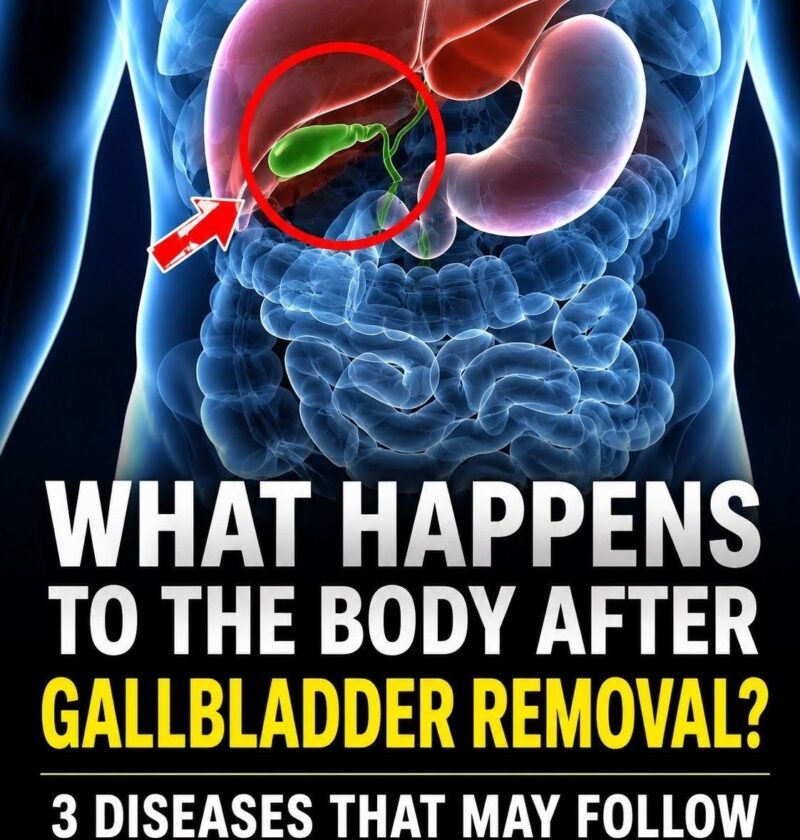
What the gallbladder does
The gallbladder stores bile (a digestive fluid) and releases it when you eat fatty foods.
When it’s removed:
- The liver still makes bile
- Bile just flows continuously into the intestine
- Digestion still works, usually normally
What actually happens after removal
Most people:
- Live completely normal lives
- Digest food without major issues
- Do not develop serious long-term disease because of it
Some may notice temporary changes like:
- Loose stools
- Bloating
- Mild fat digestion sensitivity
These usually improve over time.
“3 diseases that may follow” — what’s true?
Clickbait posts often exaggerate mild or unrelated issues. Here’s what can sometimes happen, but not as guaranteed diseases:
1. Post-cholecystectomy diarrhea
- More frequent bowel movements in some people
- Usually temporary or manageable
2. Bile reflux or indigestion symptoms
- Mild digestive discomfort in some cases
- Often improves with diet adjustment
3. Rare bile duct issues
- Uncommon complications or pre-existing conditions
- Not caused by surgery itself in most cases
🚫 What is NOT true
- Gallbladder removal does NOT “cause diseases” in most people
- It does NOT damage digestion permanently
- It is NOT something to avoid when medically necessary
In fact, untreated gallstones can be dangerous.
⚠️ Why surgery is often needed
If you delay treatment for gallstones, risks include:
- Severe pain attacks
- Infection
- Pancreatitis (can be serious)
- Gallbladder rupture (rare but dangerous)