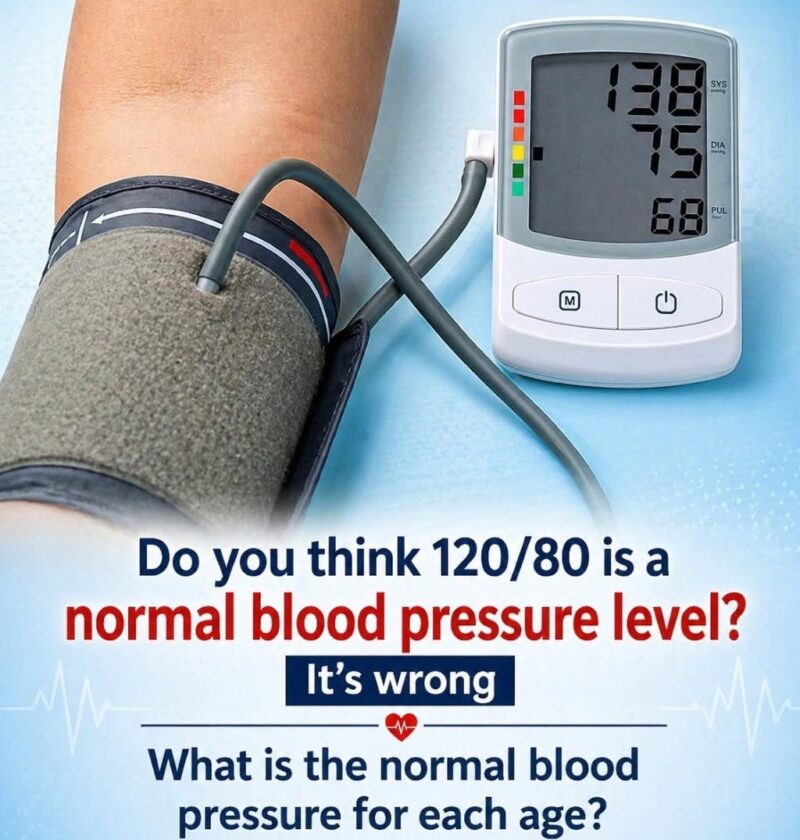
“Normal blood pressure” doesn’t change dramatically by age in healthy adults—most guidelines use the same general targets. What does change is that average blood pressure tends to rise with age, even though the ideal range stays similar.
Blood pressure is measured in systolic / diastolic (mmHg).
General normal blood pressure (all adults)
- Normal: below 120 / 80 mmHg
- Elevated: 120–129 / below 80
- High blood pressure (Hypertension):
- Stage 1: 130–139 / 80–89
- Stage 2: ≥140 / ≥90
Typical “normal ranges” by age (average targets)
Children
- 1–5 years: ~95–105 / 55–70
- 6–12 years: ~100–115 / 60–75
- Teenagers: ~110–120 / 65–80
(Children’s normal values vary strongly by height and growth percentiles.)
Adults
- 18–39 years: ~110–120 / 70–80
- 40–59 years: ~115–130 / 75–85
- 60+ years: ~120–140 / 75–90 (often slightly higher is seen, but still should be monitored)
Important clarifications
- There is no “safe higher normal” just because of age in modern medical guidelines.
- Many older adults naturally trend higher, but readings above 130/80 may still indicate risk depending on health history.
- Very low blood pressure (for example below 90/60) can also be a problem if it causes dizziness or fainting.
When to be concerned
- Repeated readings ≥140/90
- Symptoms like chest pain, headache, vision changes, or shortness of breath
- Sudden large changes from your usual readings
If you want, tell me your age and recent BP readings—I can help you interpret whether they’re normal for your situation.