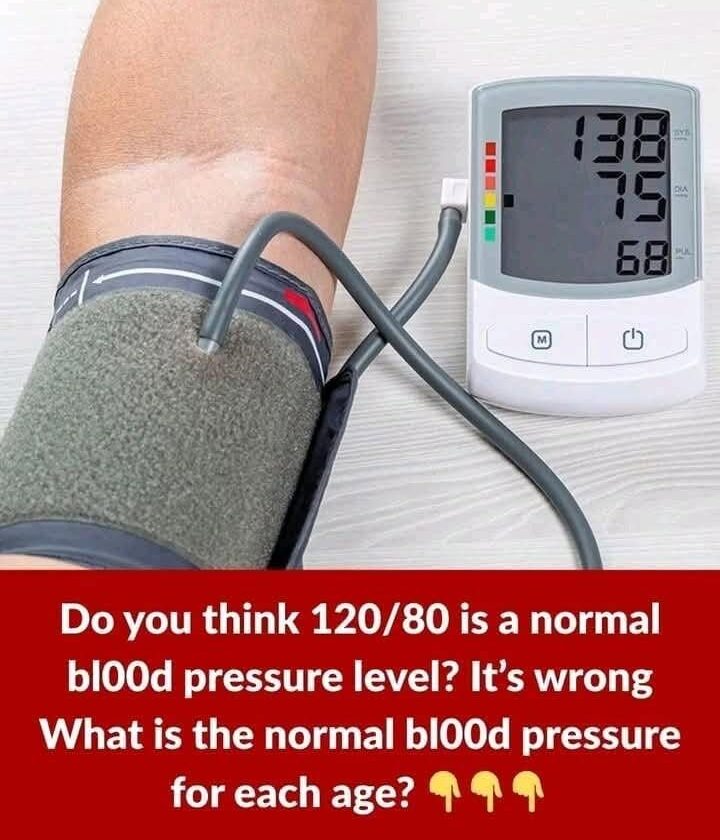
❤️ What Is the Normal Blood Pressure for Each Age? (Detailed Guide)
Blood pressure changes throughout life, and the “normal” range depends on age, health, medications, and personal risk factors. There is no single perfect number for everyone, but these are general adult reference ranges:
👶 Children
- Blood pressure varies by age, height, and development.
- Pediatric doctors use age-specific charts to determine healthy levels.
🧑 Teenagers (13–17 years)
- Around 90–120 / 60–80 mmHg is often considered a typical healthy range.
🧑 Adults (18–39 years)
- Ideal: around 120/80 mmHg or lower
- Consistently higher readings may need monitoring.
🧑 Adults (40–59 years)
- Many people remain healthiest around 120–130 / 70–80 mmHg, depending on individual health.
👵 Adults 60+ years
- Blood pressure goals are personalized.
- Many older adults are advised to keep readings near recommended targets set by their healthcare provider.
📌 Common adult blood pressure categories:
✅ Normal: Below 120/80 mmHg
⚠️ Elevated: 120–129 and below 80 mmHg
⚠️ High blood pressure (Hypertension): 130/80 mmHg or higher (confirmed with repeated readings)
🩺 Remember:
- One high reading does not always mean you have hypertension.
- Measure when relaxed, use the correct cuff size, and track readings over time.
- People with diabetes, kidney disease, heart conditions, or those taking blood pressure medicine may have different targets.
💬 Do you know your latest blood pressure reading? Share it (for example: 125/78), and you can compare it with these general ranges.