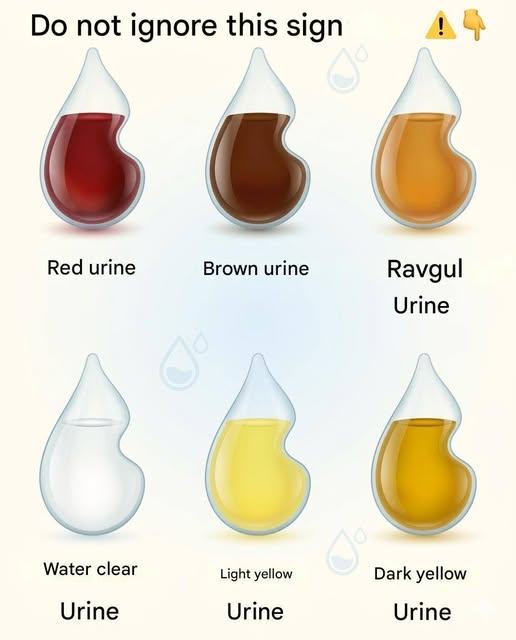
Urine color can give clues about hydration, diet, medications, and sometimes medical conditions. Here’s a quick guide:
| Urine Color | What It May Mean |
|---|---|
| Pale yellow to straw-colored | Usually normal and healthy hydration |
| Dark yellow / amber | Mild dehydration — drink more fluids |
| Clear/colorless | Very hydrated; sometimes from drinking excessive water |
| Bright yellow | Often caused by vitamins, especially vitamin B supplements |
| Orange | Dehydration, certain medications, or liver/bile duct problems |
| Pink or red | Blood, foods like beets/berries, kidney stones, infection, or other conditions |
| Brown / cola-colored | Severe dehydration, liver disease, muscle breakdown, or some medications |
| Blue or green | Rare; can come from food dyes, medications, or certain infections |
| Cloudy or foamy | Possible infection, kidney issues, or excess protein in urine |
When to see a doctor
Seek medical care if you notice:
- Blood in urine
- Persistent dark, brown, or cloudy urine
- Pain, burning, fever, or strong odor
- Foamy urine that continues
- Sudden color changes without an obvious cause
Healthy urine appearance
Most healthy urine is:
- Light yellow
- Clear
- Mild-smelling
The yellow color comes from a pigment called urochrome, and hydration level changes how concentrated it looks.
If you want, I can also provide:
- a visual urine color chart,
- causes linked to specific medications or foods,
- or signs of kidney, liver, or urinary tract problems.