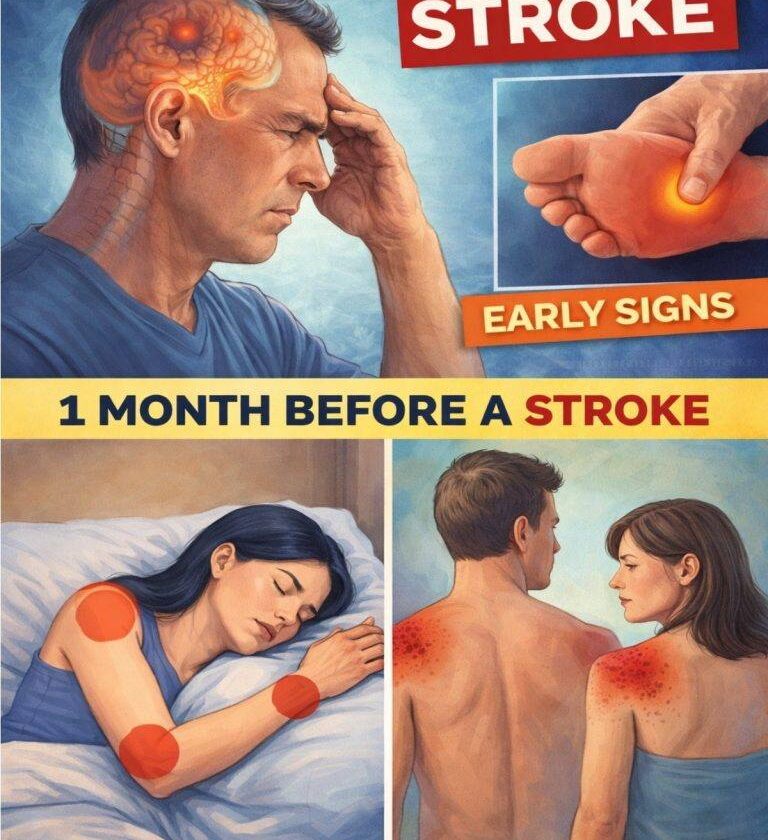
A stroke can sometimes be preceded by warning signs days or even weeks earlier — especially a TIA (transient ischemic attack), often called a “mini-stroke.” TIAs are medical emergencies because they can signal a major stroke is coming soon. The risk of a full stroke is highest in the first few days after a TIA.
Here are some commonly recognized warning signs that may appear before a stroke:
- Sudden numbness or weakness
Especially on one side of the body — face, arm, or leg. - Brief episodes of slurred speech or confusion
Trouble speaking or understanding others, even if it resolves quickly. - Temporary vision problems
Blurred vision, double vision, or vision loss in one eye. - Dizziness or loss of balance
Sudden difficulty walking or unexplained coordination problems. - Severe unexplained headache
Particularly if abrupt and unlike usual headaches. - Sudden fatigue or weakness
More common in some stroke patients, especially women. - Short-lived facial drooping
Even if it disappears after a few minutes. - Episodes that “go away” quickly
Symptoms lasting minutes can still indicate a TIA and should never be ignored.
A useful emergency test is FAST:
- Face drooping
- Arm weakness
- Speech difficulty
- Time to call emergency services
Stroke prevention is strongly supported by medical evidence. These strategies substantially reduce risk:
- Control high blood pressure
Hypertension is the biggest modifiable stroke risk factor. - Stop smoking
- Exercise regularly
Aim for at least 150 minutes/week of moderate activity. - Manage diabetes
- Treat high cholesterol
- Recognize and treat TIAs immediately
Rapid treatment after a mini-stroke can prevent a major stroke. - Maintain a healthy diet
Mediterranean-style diets are associated with lower stroke risk. - Limit alcohol and avoid illicit drugs
- Manage atrial fibrillation and heart disease
Irregular heart rhythms greatly increase stroke risk.
The phrase “No. 6 saved my patient’s life” sounds like a sensational headline rather than a verified medical claim. Stroke prevention and treatment should always be based on evidence-based medical care rather than anecdotal lists.
If someone develops sudden stroke symptoms, seek emergency medical help immediately — rapid treatment can dramatically improve outcomes.