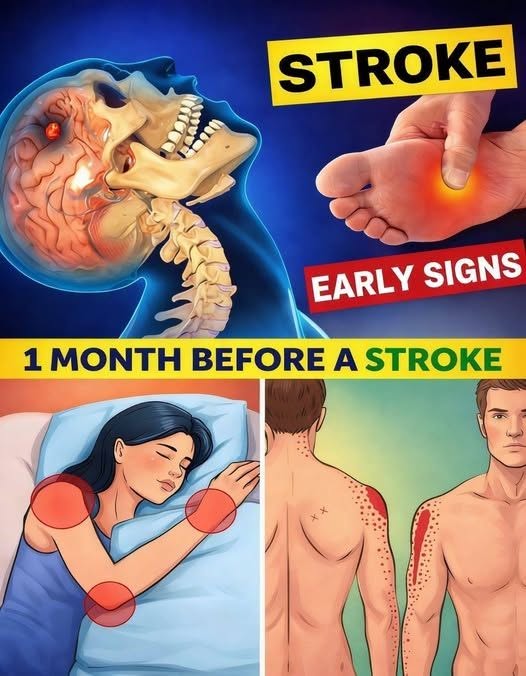
Claims like “stroke warning signs one month before” are often oversimplified. A stroke usually happens suddenly, but some people may experience earlier warning events called a Transient ischemic attack (TIA) or signs related to poor blood flow.
Here’s a clear, realistic breakdown of possible early warning signs and practical prevention tips:
⚠️ 8 possible warning signs before a stroke
These may appear days or weeks before in some people—but not always.
1. Sudden numbness or weakness (face, arm, or leg)
Often on one side of the body.
2. Brief vision problems
Blurred vision, double vision, or temporary vision loss in one eye.
3. Speech difficulties
Slurred speech or trouble finding words.
4. Unexplained dizziness or imbalance
Feeling like you might fall or can’t coordinate properly.
5. Short episodes of confusion
Difficulty understanding or processing simple information.
6. Unusual or severe headaches
Especially if sudden and different from normal headaches.
7. Tingling sensations
Pins-and-needles feeling, often on one side of the body.
8. Temporary “mini-stroke” episodes (TIA)
Symptoms appear and disappear within minutes or hours.
🚨 Important reality check
There is no reliable 1-month countdown for stroke symptoms.
However, TIAs are major warning signs and should always be treated as emergencies because they can precede a full stroke.
🛡️ 9 tips to help prevent stroke
1. Control blood pressure
The biggest risk factor—keep it in a healthy range.
2. Manage blood sugar
Important for people with diabetes or prediabetes.
3. Reduce cholesterol
High LDL increases artery blockage risk.
4. Quit smoking
Smoking significantly damages blood vessels.
5. Exercise regularly
At least 30 minutes of moderate activity most days.
6. Eat a heart-healthy diet
Focus on fruits, vegetables, whole grains, lean protein.
7. Limit salt intake
Helps prevent high blood pressure.
8. Maintain healthy weight
Reduces strain on heart and blood vessels.
9. Take prescribed medications consistently
Especially for blood pressure, diabetes, or heart conditions.
🧠 Key takeaway
- Stroke often happens suddenly
- Some people experience warning TIAs or risk symptoms
- Prevention is far more reliable than predicting timing
If you want, I can also give you a FAST stroke checklist, or explain early morning stroke symptoms and why they happen during sleep.