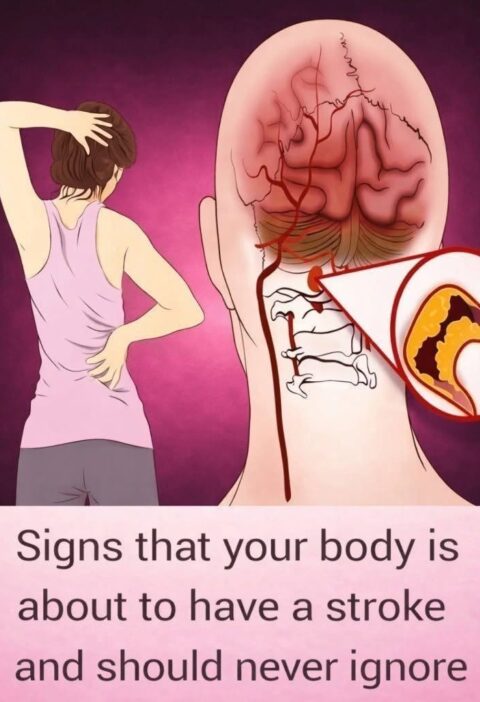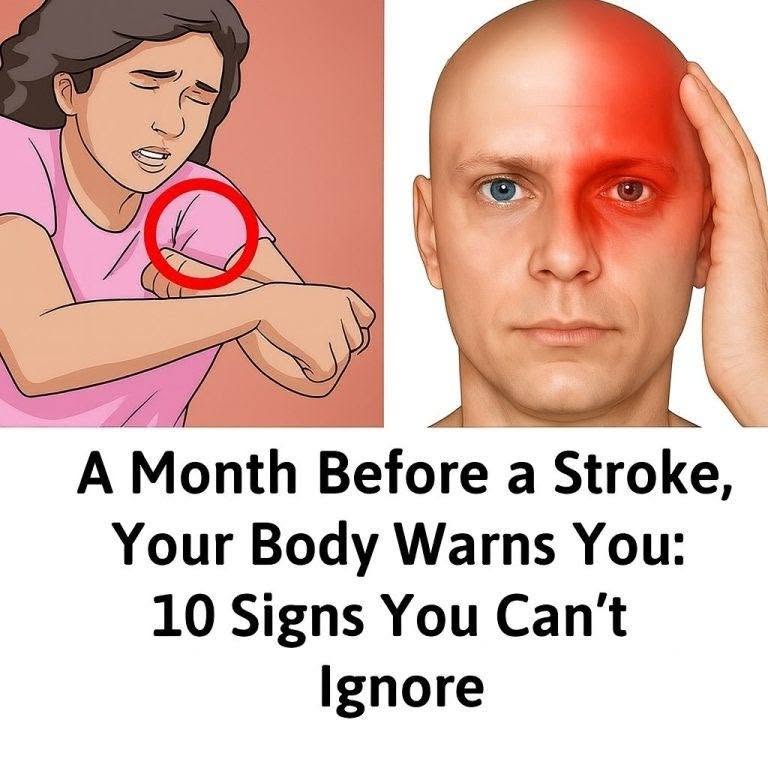
A stroke rarely happens “without warning.” In many cases, the body may give clues days or weeks in advance—especially if the underlying problem is reduced blood flow or mini-clots in the brain.
The most important condition to know here is a Transient ischemic attack (TIA), often called a “mini-stroke.” It can happen before a major stroke and should never be ignored.
Here are 10 warning signs that may appear before a stroke:
1. Sudden weakness or numbness (one side of the body)
You may feel weakness in the face, arm, or leg—often on just one side.
2. Brief vision problems
Blurred vision, double vision, or temporary loss of vision in one eye.
3. Speech difficulties
Slurred speech, trouble finding words, or confusion while talking.
4. Sudden dizziness or loss of balance
Feeling unsteady, like you might fall without reason.
5. Unusual, severe headaches
A sudden headache that feels different from normal headaches.
6. Tingling or “pins and needles”
Especially on one side of the face, arm, or leg.
7. Short episodes of confusion
Momentary difficulty understanding things or responding normally.
8. Difficulty walking
Dragging one leg or feeling coordination is off.
9. Memory or attention changes
Sudden forgetfulness or trouble focusing.
10. Transient symptoms that come and go (TIAs)
Symptoms may last minutes to hours, then disappear completely—this is a major warning sign.
🚨 Important reality check
There is no exact rule that a stroke will happen “one month before.”
But TIAs and repeated warning symptoms can occur days, weeks, or months earlier, and they are a serious red flag.
When to act immediately (FAST test)
If symptoms happen suddenly, use this check:
- F – Face: Drooping on one side
- A – Arm: Weak or numb arm
- S – Speech: Slurred or strange speech
- T – Time: Call emergency help immediately
Key takeaway
- Stroke warning signs are often sudden and brief
- Even if they disappear, they are still medical emergencies
- Early treatment can prevent a major stroke
If you want, I can also explain early morning signs of stroke, or how to reduce your risk based on blood pressure, cholesterol, and lifestyle factors.