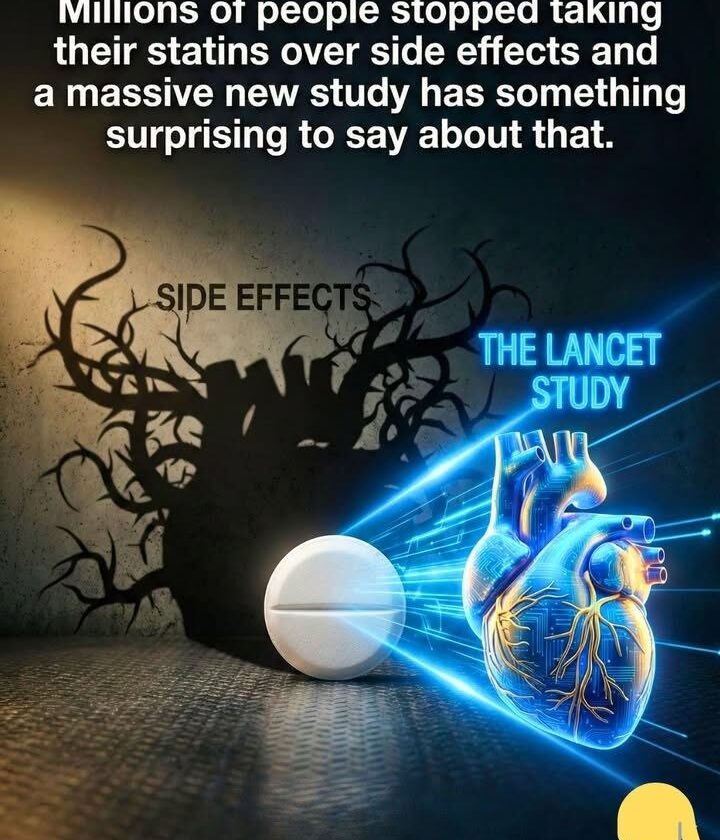
That kind of claim is plausible in direction, but it’s also the sort of headline that often oversimplifies what large studies actually show.
We don’t have the study details you’re referring to here, but in general research on statin side effects (like muscle pain, fatigue, etc.) has repeatedly found an important pattern:
1. A big chunk of reported side effects may not be drug-caused
In blinded trials, many people who stop statins due to “side effects” report similar symptoms even when they unknowingly take a placebo. This is called the nocebo effect (expecting harm → feeling symptoms).
A well-known example is the SAMSON trial (2021), which showed that a large proportion of muscle symptoms were reproduced even on placebo.
2. But that doesn’t mean all side effects are “imagined”
There are real, biologically plausible adverse effects in a smaller group, including:
- Muscle injury (rare but real myopathy)
- Mild liver enzyme changes
- Increased blood sugar risk in some people
So the truth is a mix of real drug effects + perception effects.
3. About “150,000 patients”
Large studies with that scale are usually:
- Observational (real-world data, not tightly controlled trials), or
- Meta-analyses combining multiple studies
These are useful, but they can’t fully separate:
- true drug reactions
- from reporting bias
- or confounding health conditions
So headlines often lean more confident than the data actually allows.
My take on the claim
If the study is saying “most people blaming statin side effects may be influenced by expectation bias,” that aligns with existing evidence.
But if it implies:
“Statin side effects are mostly not real”
—that would be an overreach. The best-supported view in medicine is:
Statins are generally well-tolerated, but a small percentage of people do experience genuine side effects.