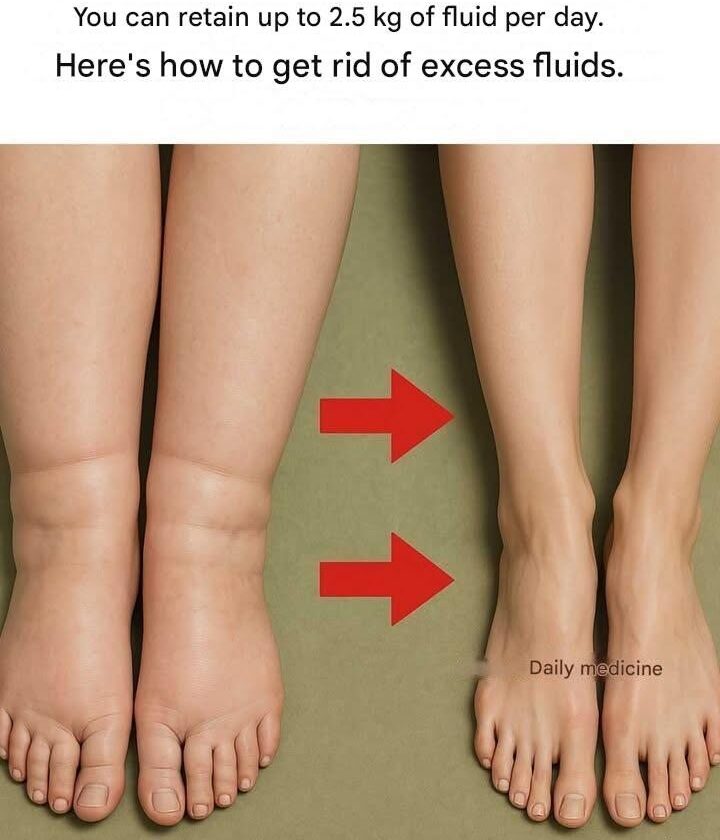
It’s true that body weight can fluctuate because of fluid changes, but the idea that everyone can “retain 2.5 kg of fluid per day” is an oversimplification. Daily changes of 1–3 kg (or more in some cases) can happen for some people due to water balance, food intake, salt, hormones, exercise, and bowel contents—not because of fat gain.
If you’re experiencing temporary water retention, these habits may help:
- Reduce excess salt intake
High-sodium foods (processed meats, packaged snacks, fast foods, some sauces) can cause the body to hold more water. - Drink enough water
Being dehydrated can encourage the body to conserve fluid. Regular hydration helps the kidneys maintain balance. - Move regularly
Walking, stretching, and exercise can improve circulation and reduce fluid pooling, especially in the legs. - Eat potassium-rich foods
Foods such as bananas, beans, leafy greens, potatoes, and yogurt can help balance sodium levels for many people. - Get adequate sleep
Poor sleep can affect hormones involved in fluid regulation. - Avoid crash “detox” diets or extreme water restriction
They can disturb electrolyte balance and are not a reliable way to reduce water weight.
When fluid retention may need medical attention
Seek medical advice if you notice:
- Sudden swelling of the legs, feet, hands, or face
- Rapid unexplained weight gain
- Shortness of breath
- Chest discomfort
- One-sided leg swelling or pain
Persistent fluid retention can sometimes be related to conditions involving the heart, kidneys, liver, hormones, or medications, so the cause matters.