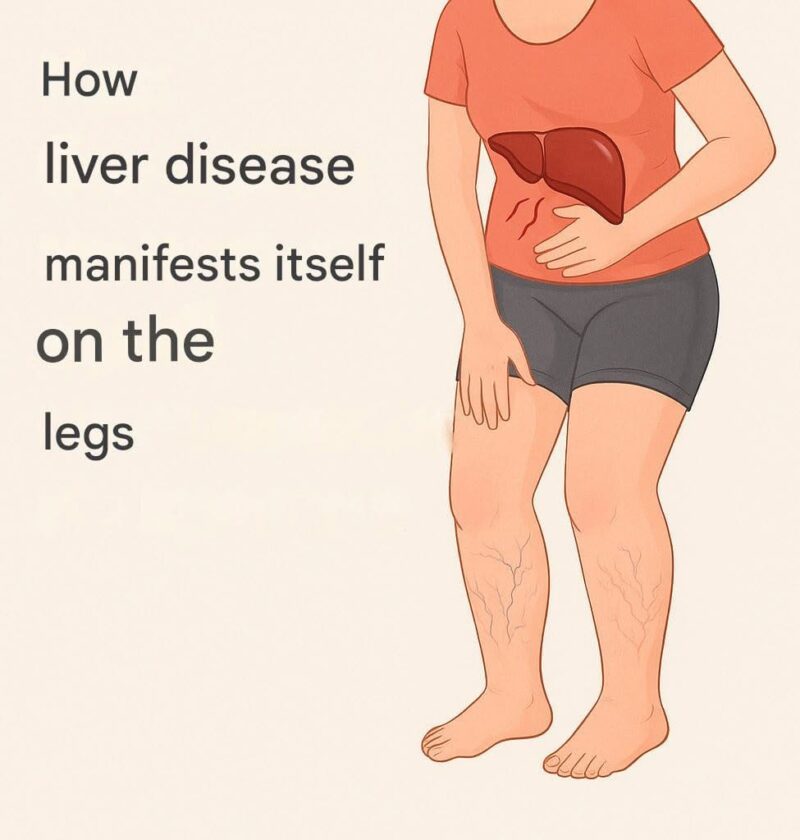
The claim that “your legs are screaming ‘HELP!’: 5 warning signs from your liver” is misleading. Liver disease does not usually announce itself through the legs alone. However, some leg symptoms can occur in people with advanced or significant liver disease.
Here are five leg-related signs that may be associated with liver problems:
- Swelling of the legs and ankles
- Advanced liver disease, such as Cirrhosis, can reduce the liver’s production of albumin and increase pressure in the veins, leading to fluid buildup (edema) in the legs.
- Easy bruising
- The liver produces proteins needed for blood clotting. When liver function is impaired, bruising may occur more easily, including on the legs.
- Severe itching
- Generalized itching, sometimes affecting the legs, can occur in certain liver and bile duct disorders because substances normally excreted in bile accumulate in the body.
- Muscle cramps or weakness
- People with advanced liver disease may experience muscle cramps or muscle loss due to nutritional deficiencies, electrolyte imbalances, or reduced muscle mass.
- Spider-like blood vessels or skin changes
- Although spider angiomas are more commonly seen on the upper body, people with chronic liver disease may also have changes in the skin and blood vessels elsewhere, along with redness of the palms.
More typical signs of liver disease
Symptoms that are more directly suggestive of liver disease include:
- Jaundice (yellow skin or eyes)
- Dark urine
- Pale or clay-colored stools
- Persistent fatigue
- Abdominal swelling (ascites)
- Pain or discomfort in the upper right abdomen
- Loss of appetite or unexplained weight loss
When to seek medical attention
See a healthcare professional if you have:
- Persistent swelling in one or both legs.
- Yellowing of the skin or eyes.
- Increasing abdominal swelling.
- Confusion or excessive sleepiness.
- Vomiting blood or passing black, tarry stools (these require urgent medical attention).
Many leg symptoms have more common causes than liver disease, such as heart failure, kidney disease, venous insufficiency, medication side effects, or prolonged standing. If leg swelling or other symptoms are new, persistent, or worsening, it’s important to have them evaluated rather than assuming they are caused by the liver.