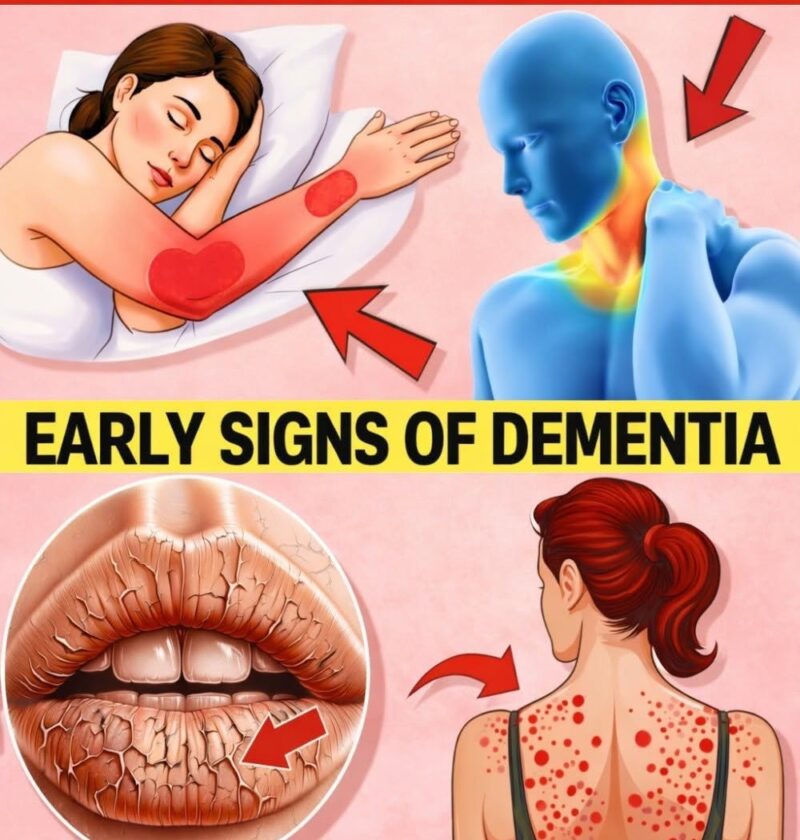
Headlines like “NEVER ignore” are designed to alarm people. The reality is more balanced: early signs of dementia can be subtle, develop slowly, and can also be caused by other treatable conditions (stress, depression, vitamin deficiencies, thyroid issues, medication side effects, or normal aging).
Dementia is not one single disease but a group of conditions that affect memory, thinking, and daily functioning—most commonly Alzheimer’s disease.
Here are 10 early signs that may warrant attention, especially if they are new or getting worse:
1. Memory loss that affects daily life
Forgetting recently learned information, important dates, or repeatedly asking the same questions.
2. Difficulty planning or solving problems
Trouble following steps in recipes, managing money, or concentrating on tasks.
3. Confusion with time or place
Losing track of dates, seasons, or not knowing how you got somewhere.
4. Trouble completing familiar tasks
Difficulty doing routine activities like cooking, driving familiar routes, or using household appliances.
5. Word-finding problems
Struggling to follow conversations or frequently forgetting common words.
6. Misplacing things often
Putting items in unusual places and being unable to retrace steps.
7. Poor judgment or decision-making
For example, unusual spending, poor hygiene choices, or ignoring safety risks.
8. Withdrawal from work or social activities
Avoiding hobbies, social events, or conversations due to confusion or frustration.
9. Changes in mood or personality
Increased irritability, anxiety, suspicion, depression, or emotional flatness.
10. Difficulty understanding visual or spatial information
Trouble judging distance, reading, or recognizing objects.
Important context (very important)
Having one or two of these occasionally does not mean dementia.
Doctors look for:
- Progression over time
- Impact on daily life
- Combination of symptoms
- Exclusion of other causes (like vitamin B12 deficiency, thyroid disease, sleep problems, or depression)
When to seek medical advice
It’s worth seeing a doctor if:
- Symptoms are getting worse over months or years
- Memory issues affect work or independence
- Family members notice consistent changes
Early evaluation is helpful because some causes of memory problems are reversible or treatable.
Bottom line
Early dementia signs are usually subtle and gradual—not sudden or dramatic. The key is persistent change in thinking or behavior that affects daily life, not occasional forgetfulness.
If you want, I can also explain:
- Difference between normal aging vs dementia
- Early Alzheimer’s signs specifically
- Or memory improvement strategies for any age