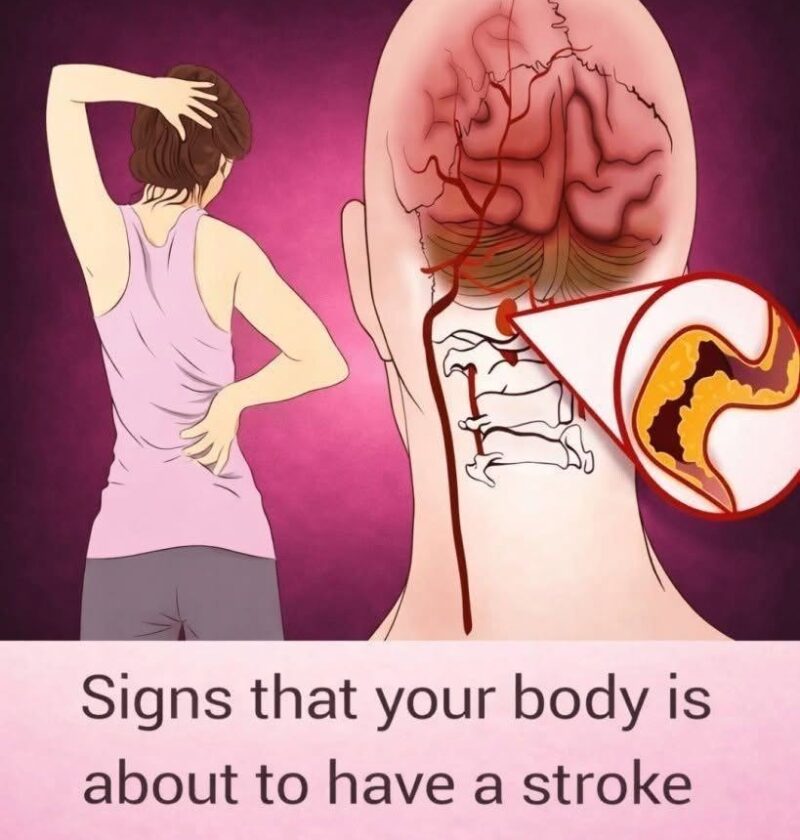
Stroke symptoms can appear suddenly, and acting fast can prevent permanent brain damage or death.
A stroke happens when blood flow to part of the brain is blocked or when a blood vessel bursts. The key is recognizing the early warning signs immediately.
Here are 10 important signs to know:
1. Sudden face drooping
One side of the face may look uneven or numb. A smile may appear lopsided.
2. Arm weakness or numbness
One arm may feel weak, heavy, or drift downward when both arms are raised.
3. Slurred or strange speech
Speech may become unclear, confused, or hard to understand.
4. Sudden confusion
Difficulty understanding simple things or responding normally.
5. Trouble seeing in one or both eyes
Blurred vision, double vision, or sudden loss of vision.
6. Sudden severe headache
A very intense headache with no known cause (more common in hemorrhagic strokes).
7. Dizziness or loss of balance
Trouble walking, coordination issues, or feeling unsteady.
8. Numbness on one side of the body
Face, arm, or leg may feel unusually weak or “asleep,” often on one side only.
9. Difficulty walking
Stumbling, dragging one foot, or sudden inability to move normally.
10. Sudden behavioral or mental changes
Personality changes, confusion, or unusual responses can appear quickly.
The FAST test (quickest way to remember)
- F – Face: Ask them to smile
- A – Arms: Ask them to raise both arms
- S – Speech: Ask them to speak a simple sentence
- T – Time: If any are abnormal, call emergency help immediately
Important medical note
A stroke (Stroke) is a medical emergency. Even if symptoms improve after a few minutes (a “mini-stroke” or TIA), it still requires urgent evaluation because it may be a warning of a major stroke.
Bottom line
If any of these signs appear suddenly—don’t wait, don’t sleep it off, don’t try home remedies. Seek emergency care immediately.
If you want, I can also explain how to tell the difference between a stroke, panic attack, and low blood sugar—they can sometimes look similar but require very different responses.