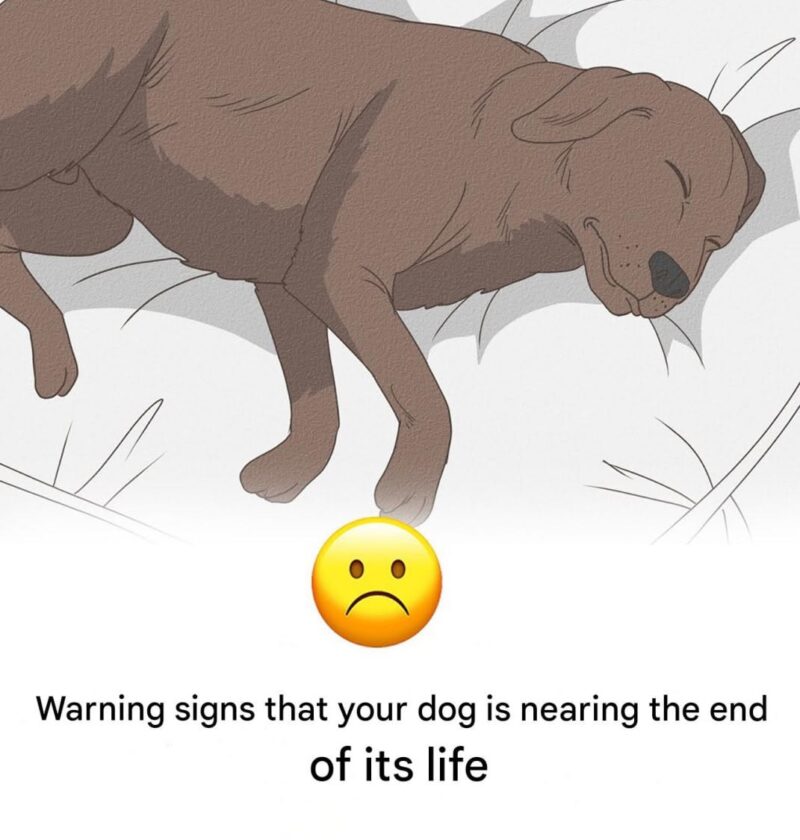
When a dog is approaching the end of life, changes often occur gradually, though the signs vary depending on age, illness, and overall health.
Common signs may include:
- Loss of appetite – Eating much less or refusing food entirely.
- Excessive sleeping – Spending most of the day resting and showing little interest in activities.
- Reduced mobility – Difficulty standing, walking, or climbing stairs.
- Weight loss – Noticeable loss of muscle and body condition.
- Withdrawal from family – Seeking solitude or showing less interest in interaction.
- Changes in breathing – Labored, rapid, or irregular breathing.
- Incontinence – Loss of bladder or bowel control.
- Confusion or disorientation – Appearing lost, staring into space, or not recognizing familiar surroundings.
- Loss of interest in favorite activities – No longer wanting to play, walk, or engage with toys.
- Chronic pain or discomfort – Whining, restlessness, panting, or difficulty getting comfortable.
- Extreme weakness – Trouble lifting the head, standing, or responding to people.
These signs do not always mean death is imminent. Many can also occur with treatable conditions, medication side effects, or temporary illness.
If your dog is showing several of these signs, a veterinarian can assess their condition, manage pain, and discuss options for comfort and quality of life. Early veterinary guidance is often the best way to ensure your dog’s remaining time is as comfortable as possible.