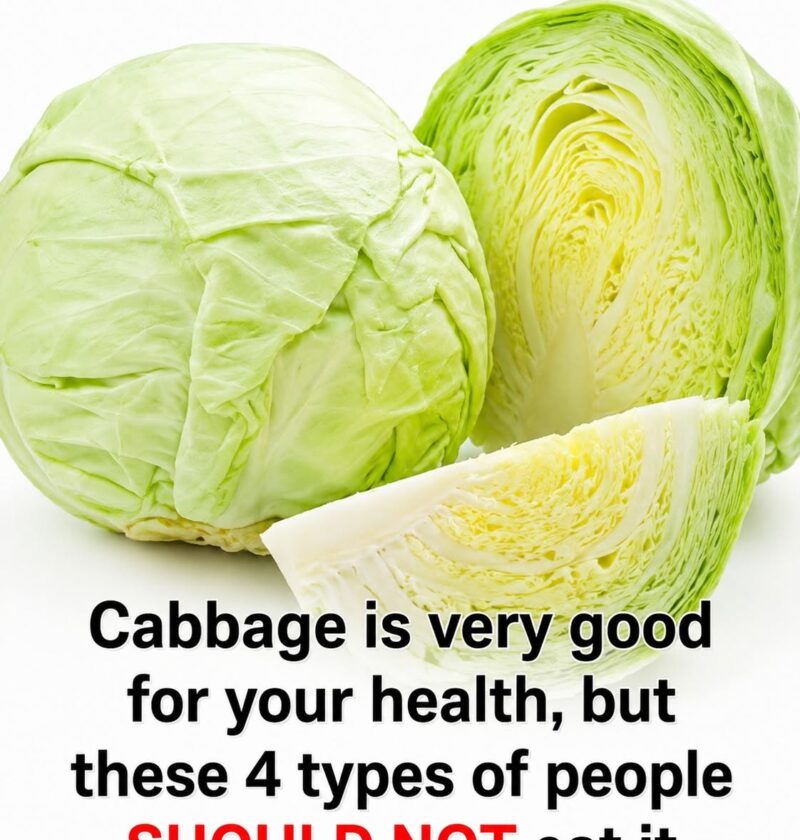
Cabbage is a nutritious vegetable rich in fiber, vitamin C, vitamin K, and plant compounds, and most people can eat it safely. However, some people may need to limit it or be cautious because it can worsen certain symptoms.
1. People with thyroid concerns (especially untreated iodine deficiency)
Why: Cabbage and other cruciferous vegetables contain compounds called goitrogens, which can interfere with thyroid hormone production in some situations, particularly when eaten in very large amounts and when iodine intake is low.
Tip: Cooking cabbage reduces these compounds, and moderate portions are usually fine for most people.
2. People with sensitive digestion or frequent gas and bloating
Why: Cabbage contains fermentable carbohydrates (FODMAPs) and fiber that can cause:
- Gas
- Bloating
- Abdominal discomfort
This may be more noticeable in people with irritable bowel syndrome (IBS) or sensitive digestion.
3. People taking blood-thinning medication (such as warfarin)
Why: Cabbage—especially green cabbage—is a source of vitamin K, which plays a role in blood clotting. Large, sudden changes in vitamin K intake can affect warfarin control.
Tip: People taking warfarin usually don’t need to avoid cabbage completely, but they should keep intake consistent and follow their clinician’s advice.
4. People who have certain food sensitivities or allergies
Why: Although uncommon, some people may react to cabbage or experience digestive symptoms after eating it.
A note for most people:
For the majority of people, cabbage is a healthy food choice. Eating it cooked, starting with smaller portions, and balancing it with other vegetables can help reduce digestive discomfort.
If you have thyroid disease, IBS, take blood thinners, or have a specific health condition, it’s best to ask a healthcare professional how much cabbage is appropriate for you.