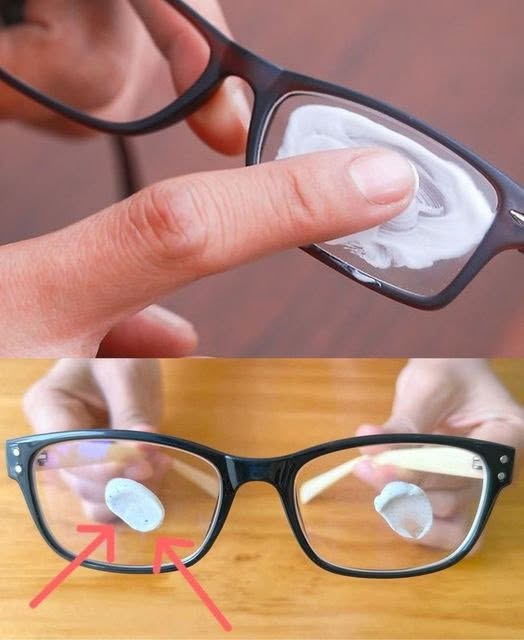
The claim “apply a little and scratches on glasses will disappear instantly” is a common internet hack, but it is usually not true. Once a lens is physically scratched, the material has been removed or damaged—there is no simple household ingredient that can restore it to a new condition.
Why popular “scratch removers” are risky
❌ Toothpaste – may contain abrasives that can make scratches or remove lens coatings.
❌ Baking soda – can scratch plastic lenses and damage anti-reflective coatings.
❌ Car polish or metal polish – may temporarily make a surface look smoother but can ruin optical coatings.
❌ Glass cleaners with ammonia – can damage some lens coatings.
What you can do instead
- Clean the lenses properly
- Rinse with lukewarm water.
- Use a small drop of mild dish soap.
- Dry with a clean microfiber cloth.
- Check if it’s actually a scratch
- Smudges, dried residue, or damaged coatings can sometimes look like scratches.
- For real scratches
- Minor cosmetic scratches: a professional optical shop may advise whether the lenses can be polished or need replacement.
- Deep scratches: replacing the lenses is usually the only reliable fix.
Prevent future scratches
- Keep glasses in a hard case.
- Don’t place lenses face-down.
- Use only microfiber cloths.
- Rinse off dust before wiping.
If your glasses have anti-glare/anti-reflective coating, scratches are often actually coating damage, and DIY polishing is more likely to make the problem worse.