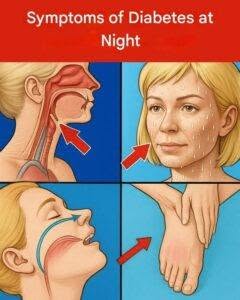
Diabetes symptoms can sometimes become more noticeable at night because blood sugar levels may change during sleep. Here are 5 nighttime symptoms that can be associated with diabetes:
- Frequent urination during the night (nocturia)
High blood sugar can cause the kidneys to remove extra glucose through urine, increasing the need to wake up and urinate. - Increased thirst at night
Losing more fluid through frequent urination can lead to excessive thirst, including waking up needing water. - Night sweats or feeling unusually hot
Blood sugar fluctuations—especially low blood sugar in people taking insulin or certain diabetes medications—can cause sweating, shakiness, or waking suddenly. - Tingling, burning, or numbness in the feet
Nerve damage related to diabetes (diabetic neuropathy) often affects the feet and may feel more noticeable at rest or at night. - Poor sleep, fatigue, or waking up feeling unrefreshed
Blood sugar changes, thirst, frequent bathroom trips, or sleep disruption can contribute to tiredness.
These symptoms do not always mean someone has diabetes—they can have many other causes. If several occur together, especially with unexplained weight loss, increased hunger, blurred vision, or slow-healing wounds, it’s worth discussing with a healthcare professional and considering a blood glucose test.
Common tests used to check for diabetes include fasting blood glucose and HbA1c (A1C), which reflects average blood sugar levels over the past few months.