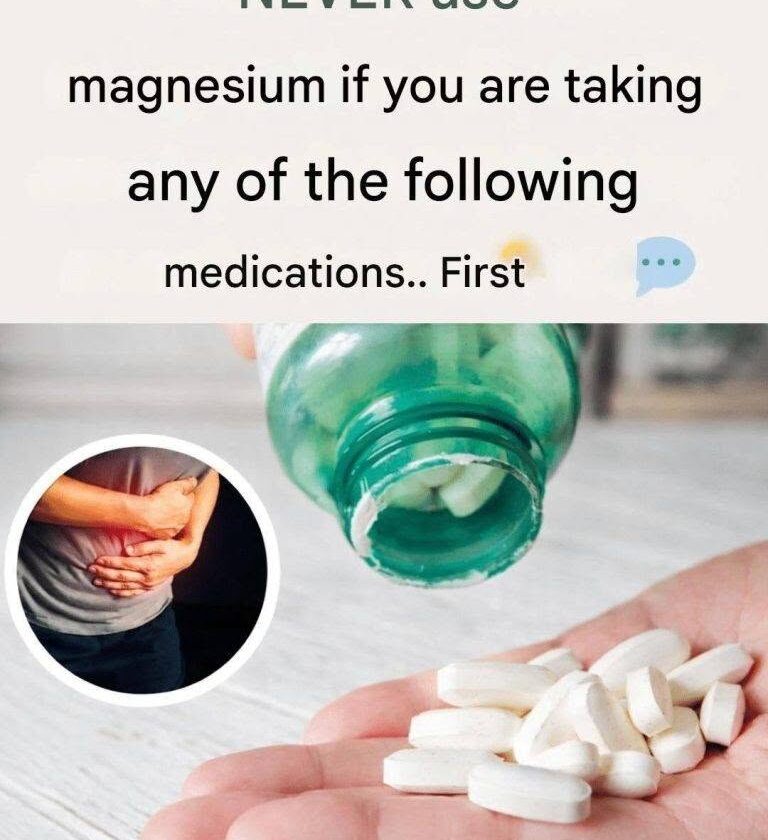
That kind of warning is overstated. Magnesium (Magnesium) is safe for most people, but it can interact with certain medications—mainly by reducing absorption or affecting electrolyte balance. It’s rarely an absolute “never,” but timing or dose adjustments are often needed.
Here are the main medication groups where caution is important:
1. Certain antibiotics
Examples:
- Tetracyclines (like doxycycline)
- Fluoroquinolones (like ciprofloxacin)
Issue: Magnesium can bind to these drugs in the gut and reduce absorption, making them less effective.
Solution: Take magnesium at least 2–6 hours apart.
2. Thyroid medication
- Levothyroxine
Issue: Magnesium can reduce absorption in the stomach.
Solution: Separate dosing by at least 4 hours.
3. Osteoporosis drugs (bisphosphonates)
- Alendronate, risedronate
Issue: Magnesium can block absorption.
Solution: Take separately (often several hours apart).
4. Blood pressure medicines & diuretics
- Some diuretics (water pills) can lower magnesium levels
- Magnesium may slightly add to blood-pressure lowering
Issue: Usually not dangerous, but BP may drop more in sensitive people.
Solution: Monitor and adjust with doctor guidance.
5. Heart rhythm medications
- Some antiarrhythmics
Issue: Magnesium can affect heart rhythm balance if levels become too high or low.
Solution: Use only under medical supervision if heart disease is present.
Important reality check
- For most healthy people, magnesium is safe and beneficial
- Problems usually happen with:
- high doses
- kidney disease
- drug timing mistakes
Bottom line
There is no universal “never use magnesium” list. The real issue is interaction timing and medical conditions, not strict avoidance.
If you want, I can tell you:
- safe daily magnesium dose by age
- or signs of too much magnesium (important if taking supplements)