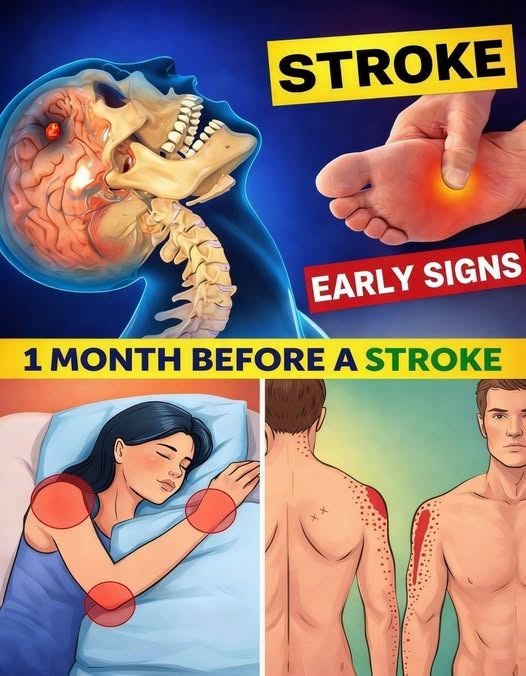
That headline is partly misleading. A true stroke usually happens suddenly, and there is no reliable set of “8 warning signs that appear one month before” in most cases. However, there are transient warning events that can happen days or weeks before in some people.
A stroke is a medical emergency involving blood flow disruption to the brain.
Possible early warning signs (not guaranteed “1 month before”)
These can occur briefly and may signal risk:
1. Transient weakness or numbness
Face, arm, or leg—especially on one side
2. Temporary speech problems
Slurred speech or difficulty finding words
3. Brief vision loss or blurring
In one or both eyes
4. Sudden dizziness or loss of balance
Trouble walking or coordination
5. Severe unexplained headache
More common in hemorrhagic strokes
6. Confusion or disorientation episodes
Short-lasting cognitive changes
7. Tingling or “pins and needles”
Especially one-sided
8. Mini-stroke (TIA)
A transient ischemic attack is a major warning sign
Stroke
Transient ischemic attack
Important truth
- Many strokes have no warning at all
- Some people experience a TIA first—but not always
- Timing is unpredictable (hours, days, or never)
9 real ways to reduce stroke risk
1. Control blood pressure (most important)
High BP is the #1 risk factor
2. Manage diabetes
Keep blood sugar stable
3. Lower cholesterol
Reduces artery blockage risk
4. Stop smoking
One of the biggest preventable risks
5. Exercise regularly
Even walking helps circulation
6. Healthy diet
Less salt, sugar, and trans fats
7. Maintain healthy weight
8. Limit alcohol
9. Treat heart rhythm problems
Especially atrial fibrillation
Bottom line
There is no guaranteed “1-month warning list.” The most important real warning is a TIA or sudden neurological symptom, which needs immediate medical attention.
If you want, I can give you a simple FAST stroke recognition guide that helps identify stroke in seconds (very useful in emergencies).