🌿 What cassava leaves are
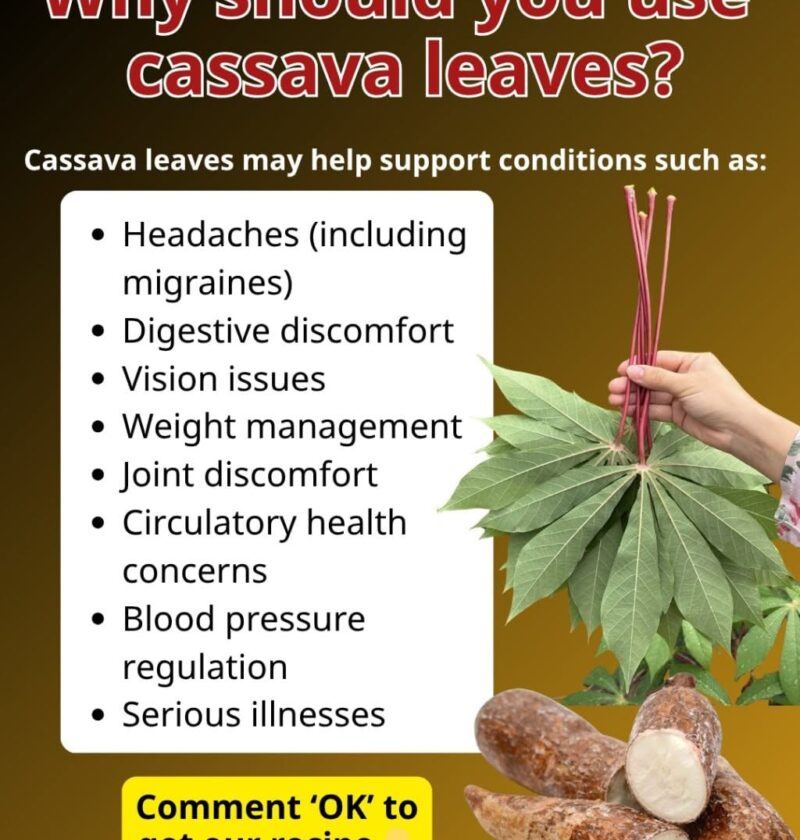
Cassava leaves come from the cassava plant, and they’re eaten in many parts of Africa, Asia, and Latin America as a cooked vegetable.
However, they are not something to eat raw or casually prepare without care.
⚠️ Important safety fact
Cassava leaves naturally contain cyanogenic compounds (which can release cyanide if not prepared properly).
That means:
- ❌ Never eat them raw
- ❌ Improper cooking can make them toxic
- ✔️ Proper boiling destroys most toxins
🍲 How they are traditionally prepared (safe method)
In cultures where cassava leaves are used safely, the process is:
- Wash thoroughly
- Pound or finely chop the leaves
- Boil for a long time (often 30–60+ minutes)
- Discard boiling water (important in many methods)
- Cook again with ingredients like:
- coconut milk
- onions
- oil
- fish or meat (optional)
This double-cooking process helps reduce toxins.
🧠 Nutrition benefits (when properly cooked)
Cassava leaves can provide:
- protein (moderate amount for a plant)
- fiber
- vitamin A and C
- iron and calcium (varies by soil and preparation)
⚠️ Risks if done wrong
Improper preparation can lead to:
- nausea
- dizziness
- stomach pain
- in severe cases, cyanide poisoning
This is why they are not a “quick health hack” food.
🧾 About viral posts like “use them in this way…”
These articles often:
- skip safety warnings
- oversell health benefits
- make traditional foods sound like miracle cures
In reality, cassava leaves are just a regional vegetable with strict preparation rules, not a medicine.
👍 Bottom line
Cassava leaves are safe only when properly cooked using traditional methods. The “secret use” claims online are usually incomplete and can be misleading if followed blindly.
If you want, I can break down other viral “superfoods” and tell you which ones are actually safe and worth it—and which ones are just hype.