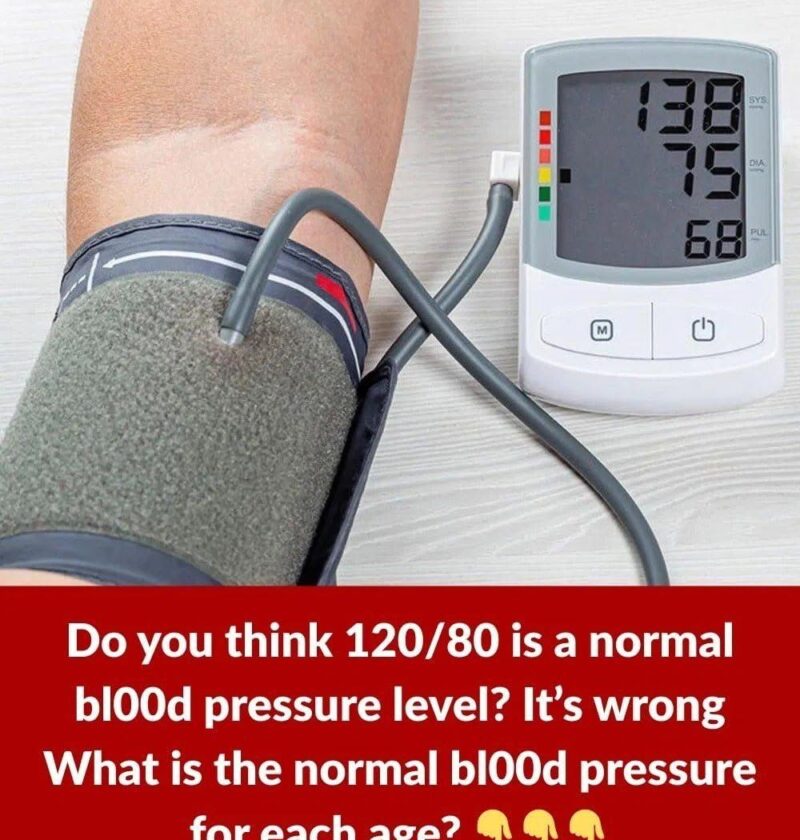
There isn’t a different “normal blood pressure” for every single age in modern medicine. Instead, most guidelines use one healthy target for adults, with some variation for children and older adults based on overall health.
Blood pressure is written as:
- Systolic (top number) / Diastolic (bottom number) in mmHg
🩺 Normal blood pressure (general guideline)
Adults (18+)
- Normal: less than 120/80 mmHg
- Elevated: 120–129 / less than 80
- High blood pressure (Hypertension): 130/80 or higher
👶 Children (approximate ranges vary by height/age)
Normal ranges are more flexible in kids:
- Newborns: ~60–90 / 20–60
- Infants: ~80–100 / 50–65
- Children (6–12 years): ~90–110 / 55–75
- Teenagers: often close to adult range (around 110–120 / 60–80)
(Doctors use percentile charts rather than fixed numbers for children.)
👵 Older adults
There is no separate “official higher normal,” but:
- Many healthy older adults still aim for <120/80
- Some medical guidelines allow slightly higher targets depending on frailty or other conditions (often <130/80)
⚠️ When it becomes concerning
- Low blood pressure: below ~90/60 (if symptoms like dizziness occur)
- High blood pressure: consistently 130/80 or above
- Emergency level: ~180/120 or higher (especially with chest pain, headache, or shortness of breath)
🧠 Important reality
- Blood pressure naturally changes during the day (stress, sleep, activity)
- A single reading is not enough—doctors look at average readings over time
- “Normal” is not just age-based; it depends on overall cardiovascular risk
Bottom line
The most important universal target for most people is:
Around 120/80 mmHg or lower
If you want, tell me your age and recent readings, and I can help you interpret whether they’re normal or not.