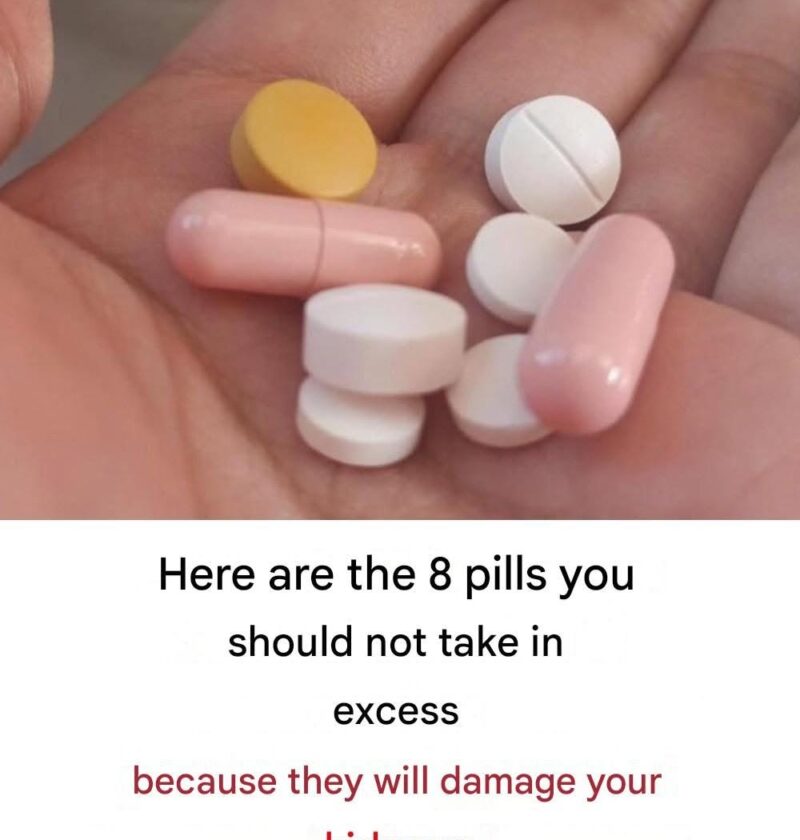
The claim “8 pills you shouldn’t take because they damage your kidneys” is misleading. Many medications can affect the kidneys, but they are often safe and beneficial when used appropriately and under medical supervision. The risk depends on factors such as dose, duration, hydration, age, and existing kidney disease.
Here are eight types of medications that can pose kidney risks:
- Ibuprofen (and other NSAIDs such as Naproxen)
- Can reduce blood flow to the kidneys, especially if you’re dehydrated or have kidney disease.
- Diclofenac
- Another NSAID with similar kidney-related risks when used frequently or in high doses.
- Certain antibiotics
- For example, Gentamicin and Vancomycin may affect kidney function, so clinicians monitor patients closely.
- Lithium
- Long-term use can affect kidney function, making regular blood and kidney tests important.
- Tacrolimus and Cyclosporine
- These are essential medications for many transplant recipients and some autoimmune conditions but require kidney function monitoring.
- Some chemotherapy drugs
- For example, Cisplatin is known to have potential kidney toxicity, so preventive measures and monitoring are routine.
- Certain antiviral medications
- Such as Tenofovir disoproxil fumarate, which can affect kidney function in some people.
- Omeprazole and other proton pump inhibitors
- Rarely, these can cause kidney inflammation. The overall risk is low, but long-term use should be reviewed periodically with a healthcare professional.
To help protect your kidneys:
- Take medications only as directed.
- Stay well hydrated unless you’ve been told to limit fluids.
- Avoid taking multiple NSAIDs at the same time.
- Tell your healthcare provider if you have existing kidney disease.
- Have kidney function checked if you’re taking medications that require monitoring.
Do not stop a prescribed medication on your own because of a headline. If you’re concerned about a specific medicine, discuss it with the clinician who prescribed it—they can weigh the benefits and risks for your individual situation.