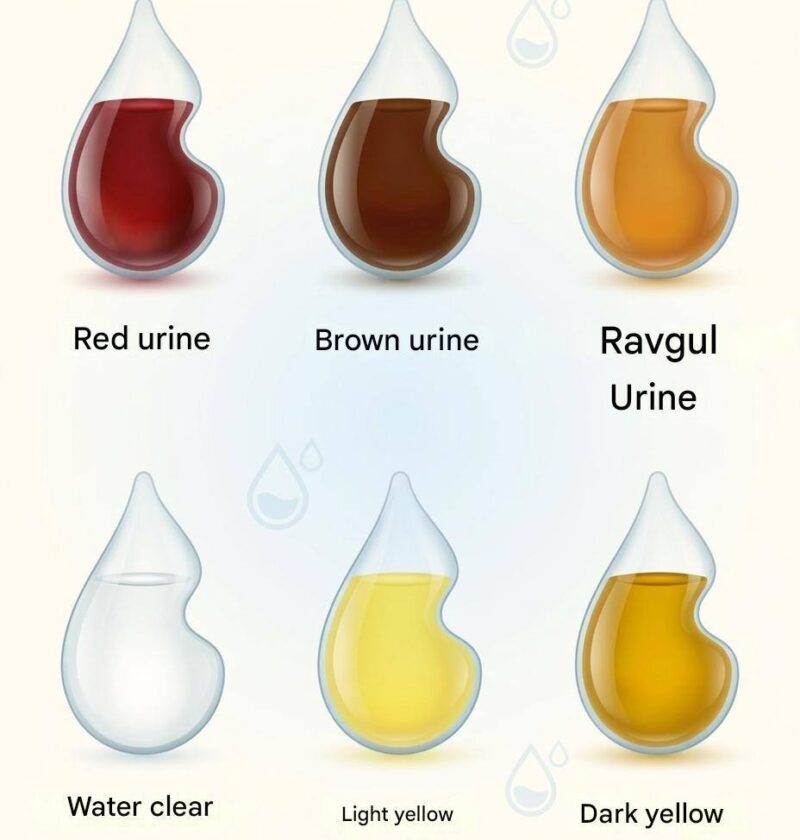
Urine color can give useful clues about hydration, diet, medications, and sometimes health conditions. A single unusual color isn’t always a problem, but persistent changes or symptoms like pain, fever, or blood should be checked by a doctor.
Here’s a quick guide:
- Pale yellow to straw-colored → Usually normal and well hydrated.
- Dark yellow or amber → Often dehydration; try drinking more water.
- Completely clear → You may be overhydrating.
- Bright neon yellow → Common after vitamin B supplements, especially riboflavin (B2).
- Orange → Can happen from dehydration, certain medications, or liver/bile issues.
- Pink or red → Could be blood, but also can come from foods like beets or berries. Blood in urine should always be evaluated.
- Brown or cola-colored → Severe dehydration, liver disease, muscle breakdown, or some medications.
- Blue or green → Rare; sometimes from food dyes, medications, or certain infections.
- Cloudy or milky → May suggest a urinary tract infection, kidney stones, or excess minerals.
- Foamy/frothy → Sometimes harmless, but persistent foam can suggest protein in the urine and kidney issues.
A simple hydration rule:
- “Lemonade” color = usually good hydration.
- “Apple juice” color = probably drink more fluids.
You should seek medical care if urine color changes come with:
- Burning or pain
- Fever
- Back/flank pain
- Swelling
- Blood clots
- Trouble urinating
- Persistent dark, red, or brown urine
Some conditions linked to urine changes include Urinary Tract Infection, Kidney Stones, and Liver Disease.