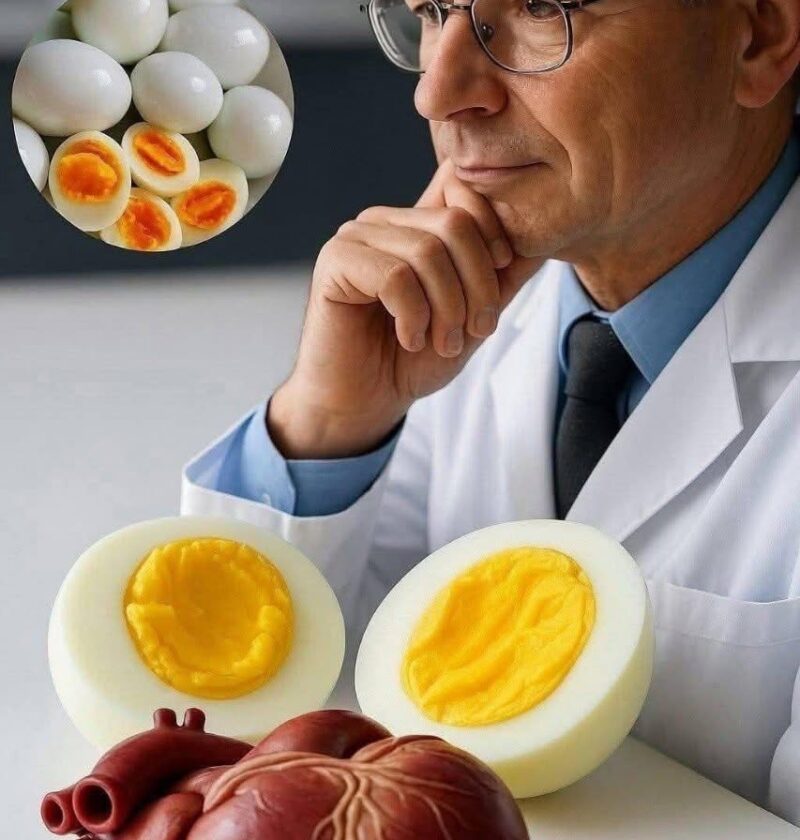
There’s no credible medical finding that “eating hard-boiled eggs causes” any sudden or specific harmful condition on its own. That kind of phrasing is typical clickbait that leaves out context.
What doctors and nutrition research actually say about hard-boiled eggs (and eggs in general) is more balanced:
Eggs are a nutrient-dense food. A standard egg provides high-quality protein, vitamins like B12 and D, and minerals such as selenium. Hard-boiling doesn’t add unhealthy fats the way frying in oil might, so it’s one of the simpler, healthier preparation methods.
The main historical concern was cholesterol. Eggs do contain dietary cholesterol, which led to fears about heart disease. But modern research shows that for most people, eating eggs in moderation has little impact on blood cholesterol levels. The bigger influence on heart health is saturated and trans fats in the overall diet, not eggs alone.
There are a few real cautions doctors mention:
- People with certain conditions (like diabetes or familial hypercholesterolemia) may need individualized limits.
- Eating excessive amounts every day could push overall dietary balance out of proportion.
- Improperly stored or undercooked eggs (not hard-boiled ones) carry a small risk of foodborne illness.
So the short version: hard-boiled eggs don’t “cause” a hidden problem. They’re generally safe and nutritious when eaten as part of a balanced diet, not in extreme amounts.
If you want, I can break down how many eggs per week are considered safe for different health goals.