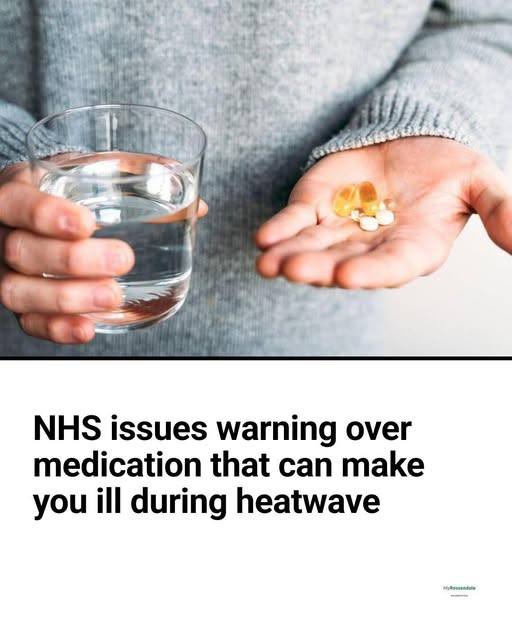
That headline is referring to a well-known NHS warning about medicines that can make it harder for your body to cope with hot weather. The issue isn’t that the drugs are “dangerous” on their own—it’s that heat can change how they affect hydration, blood pressure, and temperature regulation.
Here are the main groups of medications the NHS typically flags during heatwaves:
1. Diuretics (“water tablets”)
These increase urine output, which can lead to dehydration more quickly in hot weather.
Common for: high blood pressure, heart failure.
2. Blood pressure medicines
Especially:
- ACE inhibitors
- ARBs
- Beta-blockers
They can reduce the body’s ability to adjust blood flow and heat regulation, increasing risk of dizziness or fainting.
3. Antidepressants
Particularly:
- SSRIs
- Tricyclic antidepressants
They may affect sweating and temperature control, sometimes making overheating more likely.
4. Antipsychotic medicines
These can significantly interfere with the body’s ability to regulate temperature and can (rarely) contribute to dangerous overheating.
5. Antihistamines (older/sedating types)
Some first-generation antihistamines can reduce sweating and increase drowsiness, making heat exhaustion harder to notice.
6. Stimulants
For example ADHD medications (like methylphenidate). These can slightly raise body temperature and reduce appetite/fluids.
7. Parkinson’s disease medications
Some can reduce sweating or affect heat regulation.
Why this matters in a heatwave
Hot weather increases risk of:
- Dehydration
- Heat exhaustion
- Heatstroke
- Low blood pressure / fainting
These risks become higher if your medication affects fluid balance or sweating.
Practical safety steps
- Drink water regularly (don’t wait for thirst)
- Avoid alcohol and excess caffeine
- Stay in shade or cool rooms during peak heat
- Move slowly when standing up (to avoid dizziness)
- Check with a pharmacist or doctor before changing any medication