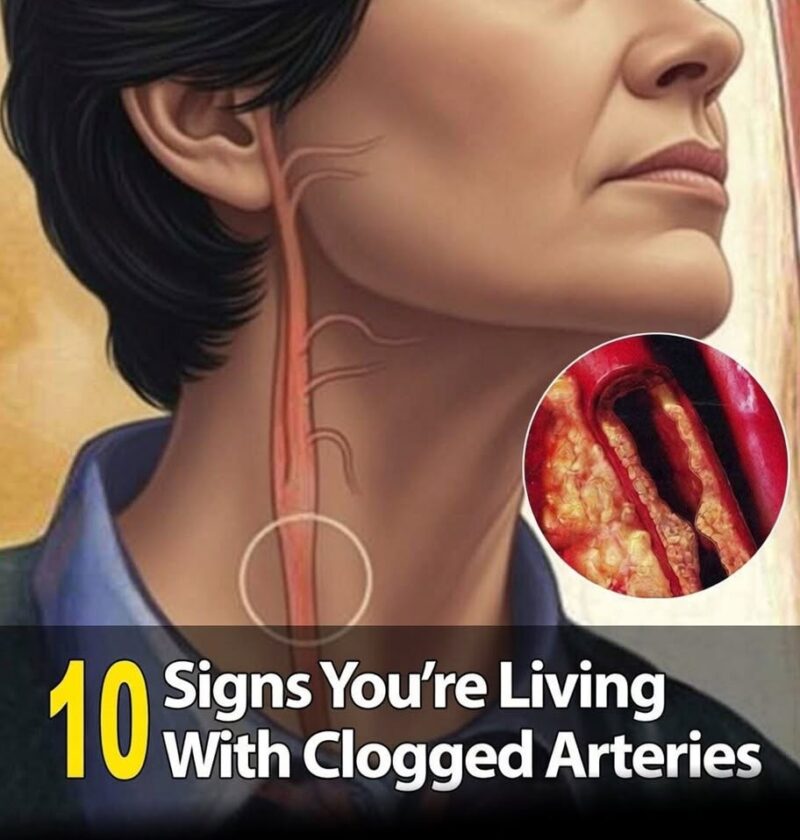
Blocked arteries (often caused by atherosclerosis, the buildup of plaque inside blood vessels) may develop slowly and sometimes cause no symptoms until a blockage becomes serious. Signs can vary depending on which arteries are affected.
10 possible warning signs of blocked arteries
- Chest pain or pressure (angina)
- A squeezing, tight, heavy, or burning feeling in the chest, especially during activity or stress.
- Shortness of breath
- Feeling unusually winded during normal activities can occur when the heart is not getting enough blood supply.
- Pain spreading to other areas
- Discomfort may spread to the arm (especially the left arm), shoulder, neck, jaw, or back.
- Unusual fatigue
- Feeling extremely tired with routine activities can sometimes be a sign of reduced heart function.
- Dizziness or lightheadedness
- Reduced blood flow to the brain or heart problems may contribute.
- Leg pain when walking (claudication)
- Cramping or aching in the calves, thighs, or hips during walking that improves with rest may indicate narrowed leg arteries.
- Coldness or numbness in the legs or feet
- Poor circulation can affect temperature and sensation.
- Slow-healing wounds
- Especially sores on the feet or legs, which may occur with poor circulation.
- Erectile dysfunction
- In some men, reduced blood flow from artery disease can contribute to erection problems.
- Stroke warning signs
- Sudden weakness or numbness on one side, trouble speaking, vision changes, or severe dizziness can signal a blocked blood vessel in the brain.
Get urgent medical help for:
- Chest pressure or pain lasting more than a few minutes
- Chest pain with sweating, nausea, shortness of breath, or pain spreading to the arm/jaw/back
- Sudden face drooping, arm weakness, or speech difficulty
Ways to support artery health:
- Don’t smoke or use tobacco
- Exercise regularly
- Manage blood pressure, cholesterol, and blood sugar
- Eat a heart-healthy diet (vegetables, fruits, whole grains, lean proteins, healthy fats)
- Follow prescribed treatments if you have risk factors
Having one of these symptoms does not automatically mean you have blocked arteries, but persistent or concerning symptoms deserve medical evaluation.