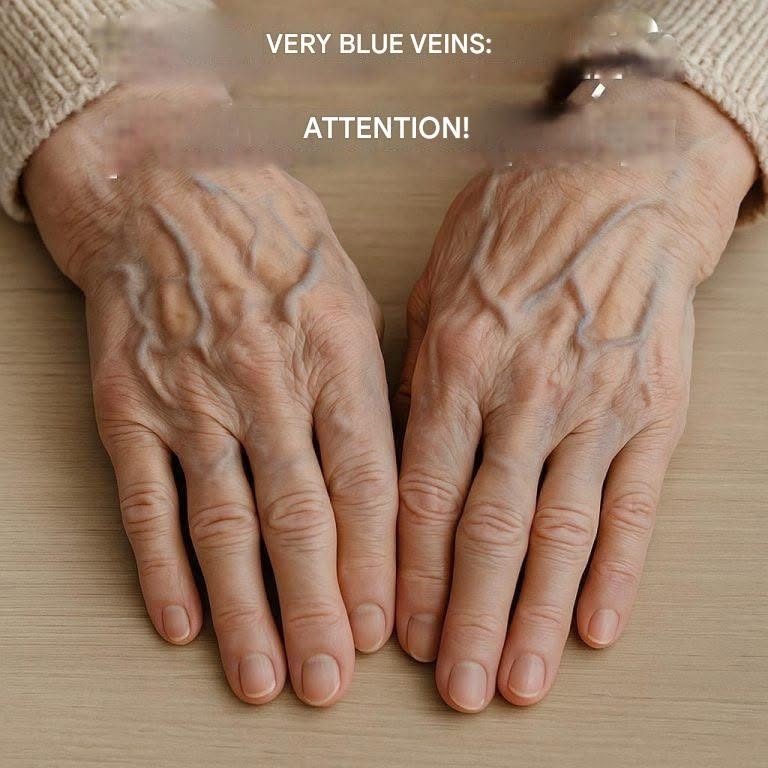
The title “Blue veins on the skin: Why they appear, when to be concerned, and how to care for your vascular health” covers a common concern. In many cases, visible blue veins are a normal feature of the body and do not mean there is a circulation problem.
Why blue veins appear
Veins can look blue or green through the skin because of how light travels through and is absorbed by skin tissue. The blood inside veins is actually dark red, not blue.
Common reasons veins become more noticeable include:
- Thinner skin with age
- As skin loses thickness and the layer of fat beneath it decreases, veins can become easier to see.
- Genetics
- Some people naturally have more visible veins due to skin tone, body structure, or inherited traits.
- Lower body fat
- Less tissue under the skin can make veins stand out more.
- Exercise
- Increased blood flow and changes in muscle size can make veins more prominent.
- Heat or activity
- Warm temperatures and physical effort can temporarily widen veins.
When to be concerned
Visible veins alone are usually not dangerous. Seek medical advice if you notice:
- A new, sudden change in the appearance of veins
- Pain, redness, warmth, or tenderness along a vein
- Swelling in one arm or leg
- Bulging, twisted veins with aching or heaviness (possible varicose veins)
- Skin discoloration, sores, or changes near leg veins
Supporting vascular health
Helpful habits include:
- Staying physically active, especially with regular walking
- Maintaining a healthy weight
- Avoiding smoking
- Managing blood pressure, cholesterol, and blood sugar
- Avoiding long periods of sitting or standing without movement
- Eating a balanced diet rich in fruits, vegetables, fiber, and healthy fats
Most visible blue veins are simply a normal variation. The most important clues are new changes, discomfort, swelling, or other symptoms, rather than the visibility of veins by itself.