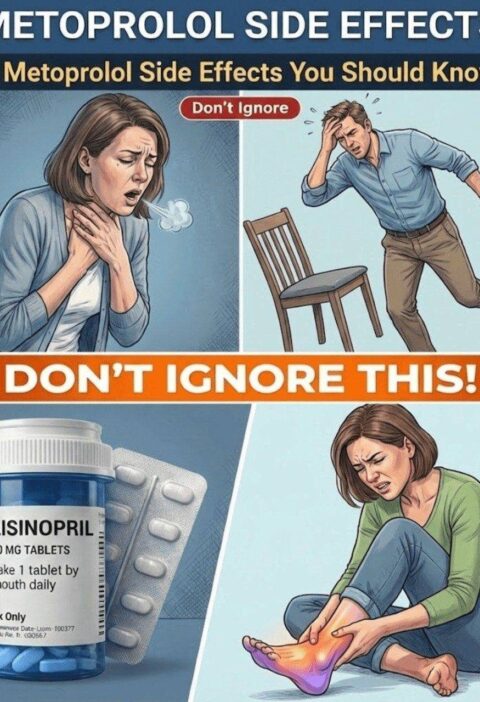
Metoprolol: The Straight Talk on 10 Side Effects & When to Get Your Doctor’s Attention ASAP
Metoprolol is a beta-blocker commonly prescribed for conditions such as high blood pressure, chest pain (angina), certain heart rhythm problems, and heart failure. It works by slowing the heart rate and reducing the workload on the heart.
Many people take metoprolol safely, but like all medicines it can cause side effects. The important thing is knowing what is expected versus what needs medical attention.
10 Common Metoprolol Side Effects
1. Slow heartbeat (bradycardia)
What you may notice:
- Lower pulse than usual
- Feeling tired or weak
- Light-headedness
Call your doctor if:
- Your heart rate becomes unusually slow
- You feel faint, dizzy, or unusually exhausted
2. Fatigue and low energy
Because metoprolol reduces the heart’s workload, some people feel:
- More tired than usual
- Less stamina during exercise
- Sleepy
This often improves as your body adjusts, but persistent or severe fatigue should be discussed with your doctor.
3. Dizziness or light-headedness
This may happen because blood pressure can drop, especially:
- When standing up quickly
- After starting treatment
- After a dose increase
Helpful tip: Rise slowly from sitting or lying positions.
4. Cold hands and feet
Beta-blockers can reduce circulation to the extremities.
You may notice:
- Cold fingers or toes
- Tingling sensations
Tell your doctor if symptoms are severe or painful.
5. Sleep problems and vivid dreams
Some people report:
- Trouble sleeping
- Unusual dreams
- Restlessness
If sleep disruption is significant, your doctor may adjust timing or dosage.
6. Shortness of breath or wheezing
This is more important in people with asthma or certain lung conditions.
Get medical advice if you develop:
- New breathing difficulty
- Wheezing
- Chest tightness
7. Depression or mood changes
Some people experience:
- Low mood
- Reduced motivation
- Mood changes
Report persistent emotional changes to your healthcare provider.
8. Sexual side effects
Some people may experience:
- Reduced sexual desire
- Erectile difficulties
Do not stop the medication suddenly; discuss alternatives with your doctor.
9. Digestive symptoms
Possible effects include:
- Nausea
- Diarrhoea
- Constipation
- Stomach discomfort
These are often mild but should be reviewed if they persist.
10. Weight changes
Some people notice:
- Slight weight gain
- Changes in exercise tolerance
A healthy diet and regular activity can help manage this.
Get Your Doctor’s Attention ASAP If You Have:
🚨 Very slow heartbeat
- Fainting
- Severe dizziness
- Confusion
- Extreme weakness
🚨 Signs of worsening heart problems
- New or increasing chest pain
- Rapid swelling of legs or ankles
- Sudden worsening shortness of breath
- Trouble lying flat because of breathing difficulty
🚨 Serious allergic reaction
- Swelling of face, lips, tongue, or throat
- Trouble breathing
- Severe rash
🚨 Very low blood sugar warning signs (especially if diabetic)
Metoprolol can sometimes hide typical warning signs of low blood sugar, such as a racing heartbeat. Watch for:
- Sweating
- Shakiness
- Confusion
- Unusual weakness
Important: Do NOT Stop Metoprolol Suddenly
Stopping it abruptly can cause:
- A rapid increase in heart rate
- Higher blood pressure
- Worsening chest pain
- Increased risk of heart complications in some people
If it needs to be stopped, doctors usually reduce the dose gradually.
Questions to Ask Your Doctor
- What heart rate and blood pressure numbers should I aim for?
- Is my current dose appropriate?
- Should I take it in the morning or evening?
- Are my other medicines safe with metoprolol?
- How should I exercise while taking it?