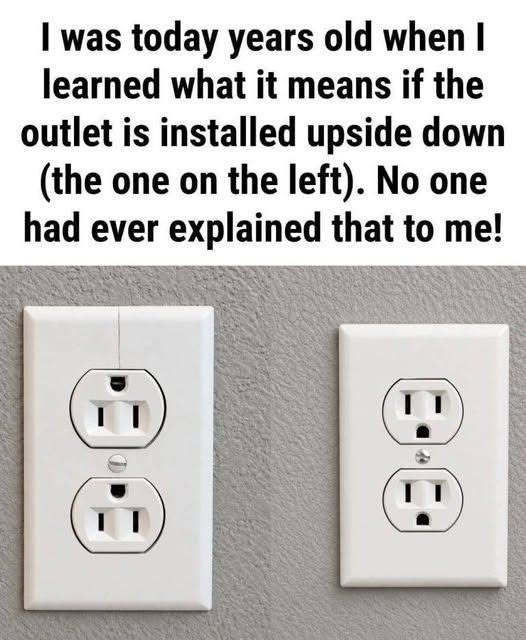
The image suggests that an upside-down electrical outlet always has a special meaning, but that’s only partly true.
Here’s what it can mean:
1. It may indicate a switched outlet
In some homes, electricians install an outlet upside down to indicate that it’s controlled by a wall switch (often for lamps). However, this is a local convention, not an electrical code requirement.
2. It may identify a dedicated circuit
In offices, hospitals, or workshops, an upside-down outlet may be used to mark a receptacle on a dedicated or emergency power circuit. Again, this depends on the building’s design and local practices.
3. It may be installed that way for safety
Some electricians prefer installing the ground slot (round hole) at the top. The reasoning is that if a metal object (such as a picture frame or tool) falls onto a partially unplugged plug, it’s more likely to contact the grounded pin first rather than the live prongs, potentially reducing the risk of a short circuit.
4. It may mean nothing at all
Sometimes the outlet was simply installed upside down because of the electrician’s preference or to match the orientation of the device or wiring. There is no universal standard requiring one orientation over the other.