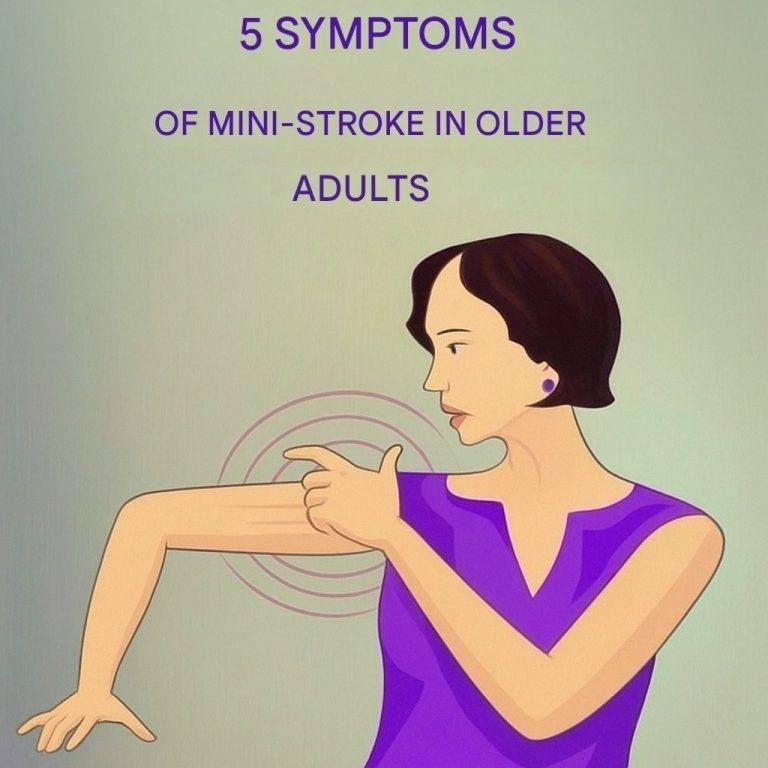
A “mini stroke” is commonly the lay term for a Transient Ischemic Attack (TIA). It happens when blood flow to the brain is briefly blocked and then restores on its own. Even though symptoms may disappear within minutes or hours, it is a serious warning sign of a possible full stroke.
Here are 5 symptoms in seniors that should never be ignored:
1. Sudden weakness or numbness (especially on one side)
A TIA can cause abrupt weakness, numbness, or paralysis in the face, arm, or leg—typically affecting only one side of the body. Seniors may suddenly struggle to hold objects, walk steadily, or lift an arm.
2. Slurred speech or trouble understanding speech
Speech may become unclear, slow, or jumbled. In some cases, the person may understand others but cannot respond properly, or they may seem confused mid-conversation.
3. Sudden vision problems
This can include blurred vision, double vision, or temporary loss of vision in one or both eyes. Some seniors describe it as a “curtain dropping” over their sight.
4. Dizziness, loss of balance, or coordination issues
A TIA may affect balance and spatial awareness, leading to sudden unsteadiness, stumbling, or difficulty walking without support—even if there is no obvious injury or vertigo history.
5. Sudden confusion or cognitive changes
This can appear as disorientation, difficulty recognizing familiar people or places, or trouble following simple instructions. It may come on abruptly and resolve just as quickly.
Important note
Even if these symptoms disappear after a few minutes, a TIA is a medical emergency warning sign, not a “minor” issue. It often precedes a full stroke, sometimes within hours or days.
If you want, I can also explain how to quickly tell the difference between a TIA and a full stroke using the FAST test.