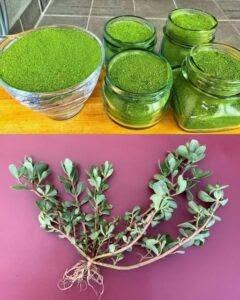
That headline is another “superfood hype” style post.
Purslane (Portulaca oleracea) is actually a real edible plant and can be nutritious—but it’s not a miracle cure, and “40 powerful reasons” is marketing exaggeration.
What purslane really is good for
It contains:
- Omega-3 fatty acids (ALA) – higher than many leafy greens
- Vitamin C
- Vitamin A (beta-carotene)
- Magnesium, potassium, calcium
- Antioxidants
So yes, it’s a nutrient-rich wild green.
Possible benefits (based on evidence, not hype)
- May support heart health due to omega-3 content
- May help with inflammation (mild effect)
- Adds fiber to diet, which supports digestion
- Low-calorie, nutrient-dense food option
What it does NOT do
- It does not “detox your body”
- It does not cure diabetes, cancer, or infections
- It does not replace medications or a balanced diet
- It is not a guaranteed “superfood fix” for health problems
Safety notes
- Usually safe when eaten in normal food amounts
- High in oxalates, so people with kidney stone history should be cautious
- Avoid collecting it from contaminated soil (roadsides, sprayed areas)
Bottom line
Purslane is a healthy wild vegetable, not a medical breakthrough. It’s useful as part of a varied diet—but claims of “powerful life-changing effects” are mostly social media exaggeration.
If you want, I can tell you how purslane compares nutritionally to spinach or kale so you can see its real value clearly.