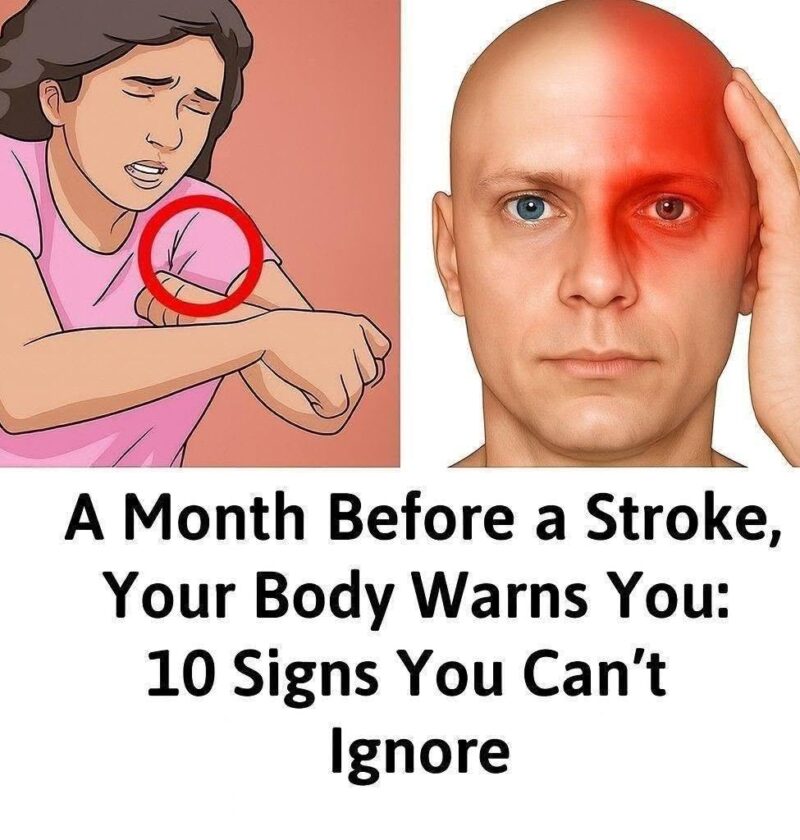
A stroke can sometimes be preceded by warning signs—but an important correction first: there is no reliable “1 month countdown” where your body always warns you. Some people do experience early symptoms days to weeks before, usually due to mini-strokes (Transient Ischemic Attack / TIAs) or worsening vascular disease. Others have no warning at all.
That said, here are 10 warning signs that may appear before a stroke and should never be ignored:
1. Sudden weakness or numbness (especially one side)
Face, arm, or leg weakness on one side of the body is a classic red flag.
2. Brief episodes of facial drooping
One side of the face may look uneven, even if it resolves quickly.
3. Temporary speech problems
Slurred speech, trouble forming words, or confusion while speaking.
4. Short episodes of vision loss or disturbance
Blurred vision, double vision, or a “curtain” coming over one eye.
5. Sudden dizziness or loss of balance
Feeling unsteady, vertigo, or difficulty walking without clear reason.
6. Unexplained severe headache
A sudden, intense headache—especially “the worst ever”—can signal bleeding or vascular issues.
7. Tingling or numbness that comes and goes
Especially if it affects one side of the body or occurs suddenly.
8. Brief confusion or memory lapses
Sudden difficulty understanding speech or getting confused in familiar situations.
9. Difficulty swallowing
Trouble swallowing food or liquids without another clear cause.
10. Short-lived “mini-stroke” episodes (TIAs)
Symptoms like weakness, speech trouble, or vision issues that resolve within minutes to hours. These are strong warning signs that a major stroke risk is high in the near future.
Why these signs matter
Many strokes happen because of blocked or ruptured blood vessels in the brain (Stroke). TIAs are especially important because they often mean blood flow is already being temporarily interrupted.
A key point:
👉 Even if symptoms disappear quickly, it is still a medical emergency.
When to act immediately
Use the FAST rule:
- Face drooping
- Arm weakness
- Speech difficulty
- Time to call emergency services
If you want, I can also explain:
- stroke risk factors (blood pressure, diabetes, etc.)
- how to reduce risk significantly in daily life
- or how to tell stroke vs migraine vs anxiety symptoms apart