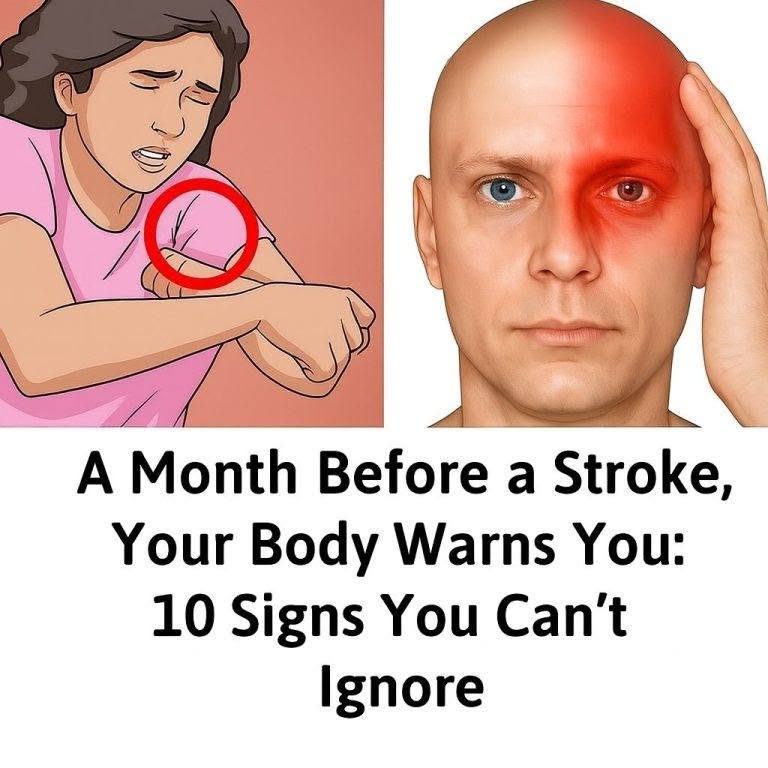
A Month Before a Stroke, Your Body May Warn You: 10 Signs Not to Ignore
A stroke happens when blood flow to part of the brain is interrupted, either by a blocked blood vessel (ischemic stroke) or a bleeding vessel (hemorrhagic stroke). While many strokes occur suddenly, some people experience warning symptoms called transient ischemic attacks (TIAs) or other changes before a major stroke.
A “warning sign a month before” is not a guarantee that a stroke will happen, but certain symptoms should be taken seriously because they may indicate increased risk.
10 Possible Warning Signs You Should Not Ignore
1. Sudden weakness or numbness on one side
Watch for:
- Weakness in the face, arm, or leg
- Numbness or tingling on one side of the body
- Difficulty lifting an arm or smiling evenly
This is one of the most important stroke warning signs.
2. Trouble speaking or understanding words
Possible signs include:
- Slurred speech
- Difficulty finding words
- Confusion during conversations
- Trouble understanding others
3. Sudden vision changes
These may include:
- Blurred vision
- Loss of vision in one or both eyes
- Double vision
4. Unexplained dizziness or loss of balance
Pay attention to:
- Sudden spinning sensations
- Trouble walking
- Loss of coordination
- Feeling unusually unsteady
5. Severe or unusual headaches
A sudden, intense headache—especially one unlike previous headaches—can be a warning sign, particularly if it occurs with:
- Vomiting
- Confusion
- Weakness
- Neck stiffness
6. Brief episodes that come and go (possible TIA)
Some stroke warnings last only minutes and then disappear, such as:
- Temporary weakness
- Temporary speech difficulty
- Temporary vision loss
Even if symptoms resolve, a TIA requires medical attention because it can be a warning of a future stroke.
7. Increased confusion or difficulty thinking clearly
New problems with:
- Memory
- Concentration
- Following conversations
- Performing familiar tasks
should be evaluated, especially if they appear suddenly.
8. Numbness or unusual sensations
Some people notice:
- Tingling
- “Pins and needles”
- A strange heavy feeling in an arm or leg
9. Sudden changes in walking or coordination
Examples:
- Stumbling more than usual
- Difficulty controlling movements
- New clumsiness
10. Extreme fatigue or feeling unusually unwell
Fatigue alone is usually not a stroke sign, but sudden unexplained exhaustion—especially with other symptoms—should not be ignored.