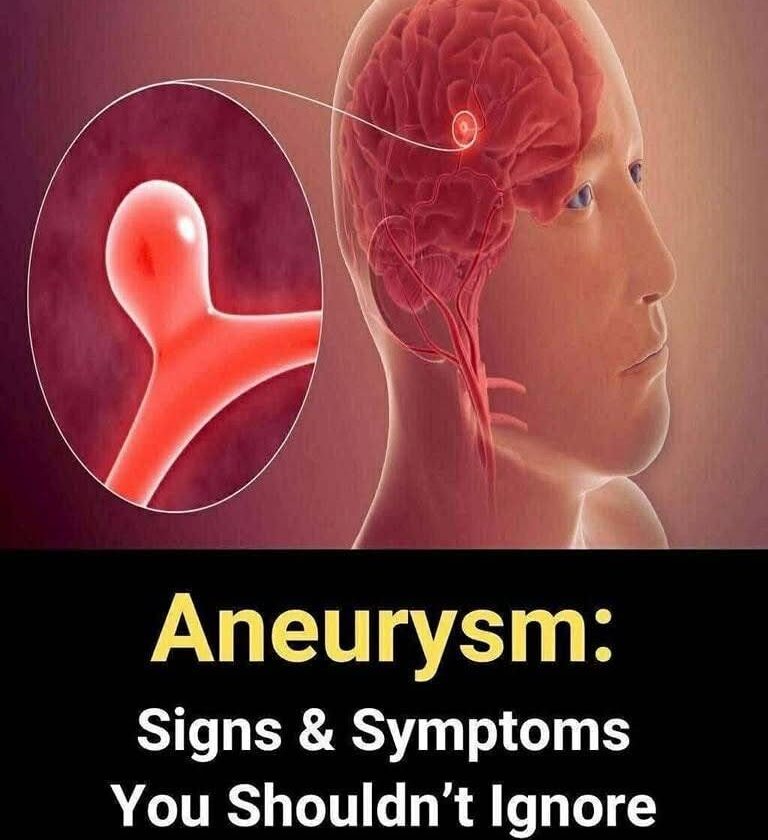
An aneurysm is a weakened area in the wall of an artery that becomes enlarged or bulges outward. Some aneurysms grow slowly and cause no symptoms, while others can become life-threatening if they rupture.
Knowing the warning signs can help you seek medical care quickly when needed.
Possible warning signs of an aneurysm
1. Sudden, severe headache
A sudden “worst headache of your life” may be a warning sign of a ruptured brain aneurysm, especially if it comes with:
- Nausea or vomiting
- Neck stiffness
- Confusion
- Loss of consciousness
2. Vision problems
Possible signs include:
- Blurred or double vision
- Loss of vision
- A drooping eyelid
- Eye pain or pressure
3. Weakness, numbness, or trouble speaking
These symptoms can resemble a stroke and may occur when an aneurysm affects blood flow in the brain.
4. Chest or upper back pain
An aneurysm involving the aorta (the body’s largest artery) may cause:
- Sudden, severe chest pain
- Deep pain between the shoulder blades
- A tearing or ripping sensation
5. Abdominal pain or a pulsing feeling in the belly
An abdominal aortic aneurysm may sometimes cause:
- Deep abdominal or back discomfort
- A noticeable pulsing sensation near the abdomen
6. Shortness of breath or difficulty swallowing
Large aneurysms in the chest can sometimes press on nearby structures.
7. Dizziness or fainting
These may occur if an aneurysm affects circulation or causes sudden internal bleeding.
8. Sudden collapse or signs of shock
Possible signs include:
- Pale, clammy skin
- Rapid heartbeat
- Weakness
- Confusion
Emergency warning signs — seek help immediately
Call emergency services if someone experiences:
- Sudden severe headache
- Sudden weakness on one side of the body
- Trouble speaking
- Loss of consciousness
- Sudden severe chest, back, or abdominal pain
Who may have a higher risk?
Risk factors can include:
- High blood pressure
- Smoking
- Older age
- Family history of aneurysms
- Certain inherited conditions affecting connective tissue