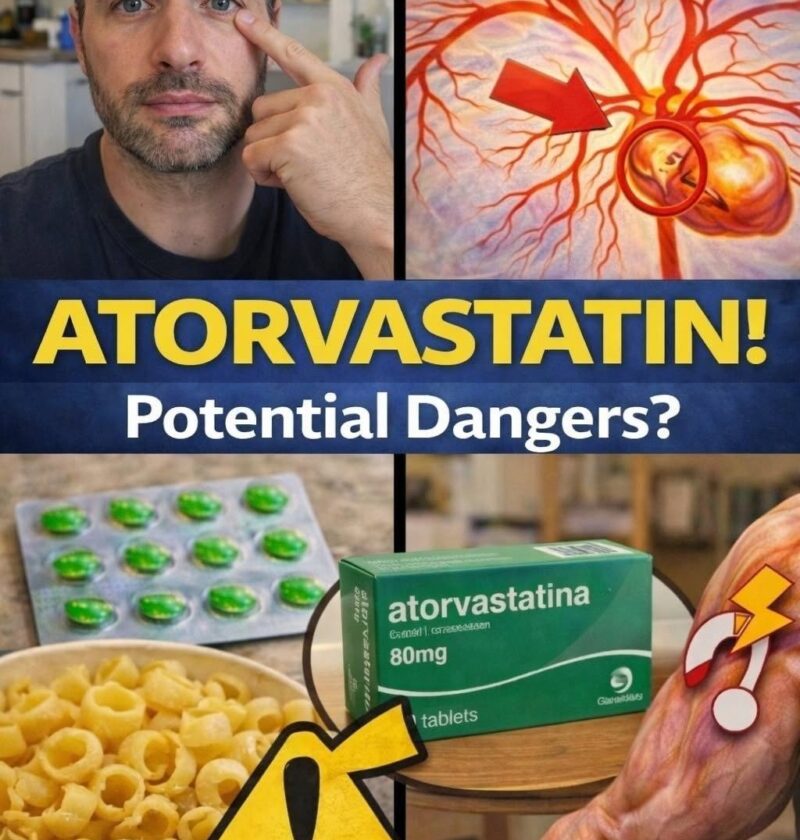
That headline is designed to sound alarming, but it’s misleading. It implies there are “hidden dangers doctors don’t tell you,” which is not accurate. The side effects of statins are well studied, widely published, and routinely discussed in medical practice.
Atorvastatin is one of the most prescribed medicines in the world for lowering LDL cholesterol and reducing the risk of heart attack and stroke.
🧠 What the evidence actually shows
Atorvastatin has known benefits and known risks. Here’s the balanced medical view:
👍 Proven benefits
- Lowers LDL (“bad”) cholesterol
- Reduces risk of heart attack
- Reduces risk of stroke
- Helps prevent repeat cardiovascular events in high-risk patients
These benefits are strongly supported by large clinical trials.
⚠️ Real (known) side effects
1. Muscle-related symptoms (most common)
- Muscle pain or soreness
- Muscle weakness in some cases
- Rare severe form: muscle breakdown (very rare)
2. Mild liver enzyme changes
- Usually temporary and reversible
- Serious liver damage is very rare
Doctors sometimes monitor liver tests.
3. Slight increase in blood sugar
- Small increased risk of developing type 2 diabetes in some people
- Mostly in those already at risk
4. Digestive symptoms
- Nausea
- Constipation or diarrhea
- Mild stomach discomfort
5. Rare neurological complaints
- Some people report memory issues or “brain fog”
- Large studies have NOT confirmed permanent brain damage
- Symptoms are usually reversible if medication is adjusted
❌ Claims in clickbait articles (not supported)
“Hidden dangers doctors don’t tell you”
False. These effects are:
- Listed in prescribing guides
- Discussed in consent discussions
- Monitored in clinical follow-up
“Rapid aging”
No scientific evidence.
“Severe brain damage”
Not supported by clinical trials.
“Everyone will suffer serious side effects”
False. Most people tolerate statins well.
⚖️ Important medical reality
Statins are recommended because:
- Heart disease is a leading cause of death worldwide
- The benefit often outweighs the risk, especially in high-risk patients
Doctors usually:
- Start with low or moderate doses
- Adjust if side effects occur
- Switch statins if needed