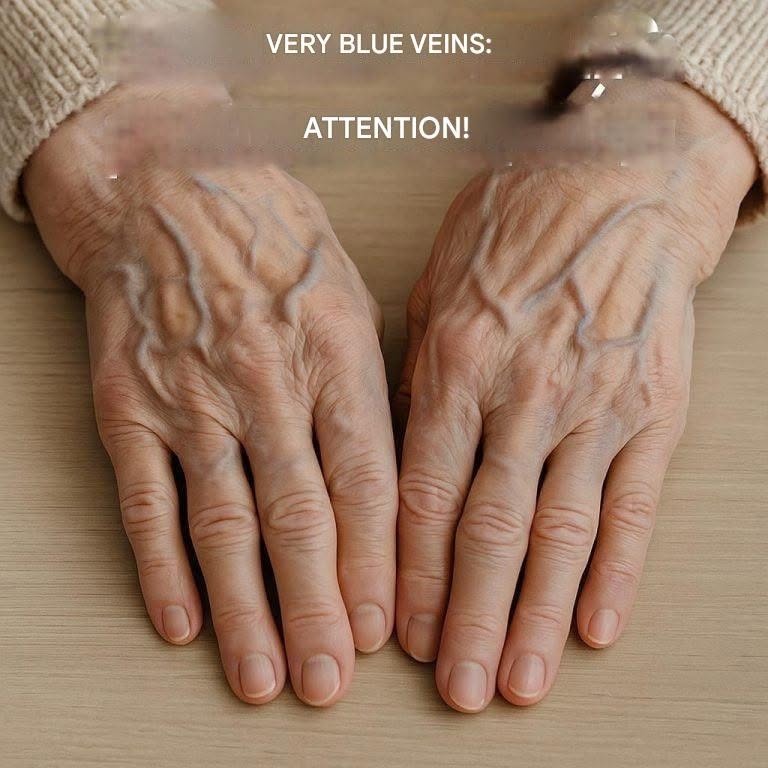
The title “Blue veins on the skin: Why they appear, when to be concerned, and how to care for your vascular health” reflects a reasonable health topic. In most cases, visible blue veins are normal and not a sign of disease.
Why blue veins appear
Veins often look blue because of the way light passes through the skin and reflects back to your eyes. The blood in your veins is actually dark red, not blue.
Common reasons veins become more noticeable include:
- Thin or fair skin
- Aging, which makes skin thinner and reduces the fat beneath it
- Low body fat
- Genetics
- Exercise, especially strength training
- Warm weather, which can temporarily enlarge veins
When to be concerned
Visible veins alone usually aren’t a problem. However, it’s worth getting medical advice if you notice:
- New bulging, twisted veins, especially in the legs (possible varicose veins)
- Pain, aching, heaviness, or swelling in the legs
- Skin changes, such as discoloration, thickening, or sores near the ankles
- A vein that becomes red, warm, tender, or hard
- Sudden swelling of one leg or arm, especially if it’s painful
These symptoms can sometimes indicate conditions affecting the veins or circulation that may need treatment.
How to support vascular health
Healthy habits that benefit your blood vessels include:
- Regular physical activity, such as walking
- Avoiding smoking
- Maintaining a healthy weight
- Managing blood pressure, cholesterol, and blood sugar
- Avoiding long periods of sitting or standing without moving
- Elevating your legs occasionally if you have mild swelling
- Wearing compression stockings if recommended by a healthcare professional
Most visible blue veins are simply a normal variation in appearance. The key is to pay attention to new symptoms—such as pain, swelling, skin changes, or rapidly changing veins—rather than the color or visibility of the veins alone.