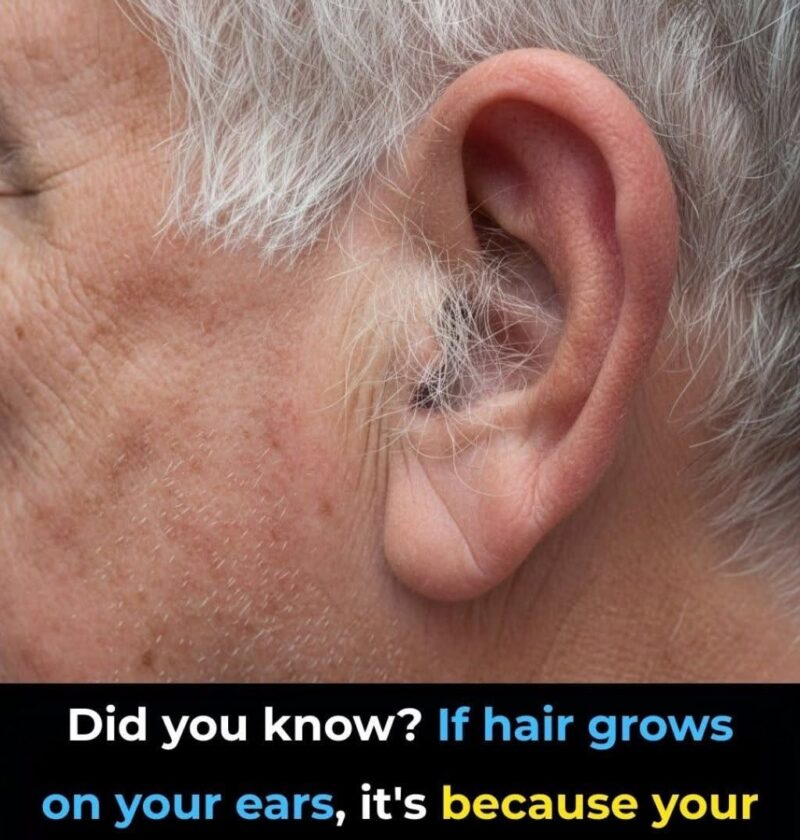
The evidence shows:
- Ear hair is a normal part of aging, especially in men. As people get older, hair in and around the ears can become thicker and more noticeable.
- Genetics play a major role in how much ear hair someone develops.
- Hormones, particularly androgens (male sex hormones), influence hair growth patterns, but ear hair alone is not a reliable sign of a hormone imbalance or disease.
There is no scientific evidence that ear hair means your body is “full of toxins,” has a vitamin deficiency, or is sending a specific warning signal. While some studies have explored possible associations between ear hair and certain health conditions, these findings have been inconsistent and do not establish that ear hair causes or reliably predicts disease.
If ear hair growth is gradual and occurs with age, it’s generally considered normal. If you experience sudden, excessive hair growth along with other unusual symptoms, it’s worth discussing with a healthcare professional, as they can evaluate whether an underlying medical condition is contributing.
If you have the full post or claim, I can assess whether it’s supported by scientific evidence.