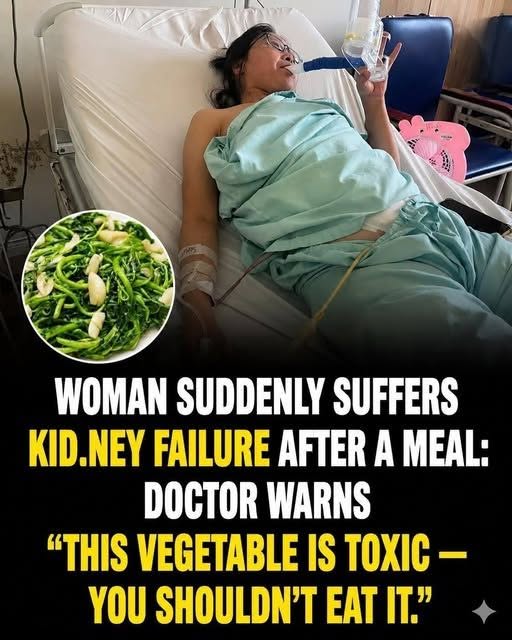
That headline is almost certainly sensationalized clickbait, not a real medical statement.
No credible doctor would say “this vegetable is poisonous” without specifying which plant, what part, and in what condition, because many foods people call “vegetables” are only harmful in certain forms or amounts.
What’s usually going on behind headlines like this:
1. It’s about a specific preparation, not the whole vegetable
Some foods are only dangerous when raw or improperly prepared, for example:
- Raw kidney beans (contain natural toxins if undercooked)
- Cassava (must be properly processed to remove cyanide compounds)
- Some wild or bitter varieties of plants
2. It may refer to leaves vs. edible parts
A classic example:
- Rhubarb stalks are edible, but rhubarb leaves contain toxic compounds
So the “vegetable” isn’t poisonous—just a part of it is.
3. It may be about overconsumption
Even safe vegetables can cause issues if eaten in extreme amounts:
- Too much spinach or beet greens → high oxalates (can affect kidney stone risk in some people)
- Excess cruciferous vegetables → digestive discomfort in sensitive people
4. It may be completely exaggerated for attention
A lot of content farms use fear-based phrasing like:
- “Doctors warn…”
- “Never eat this again…”
- “This common food is deadly…”
These are designed to get clicks, not to provide balanced nutrition advice.
Bottom line
There is no single commonly eaten vegetable that is universally “poisonous” in normal diets. Real risk depends on:
- preparation method
- quantity
- individual health conditions
- specific plant variety
If you want, paste the full article or name of the vegetable they’re talking about—I can break down whether there’s any real science behind it or if it’s pure misinformation.