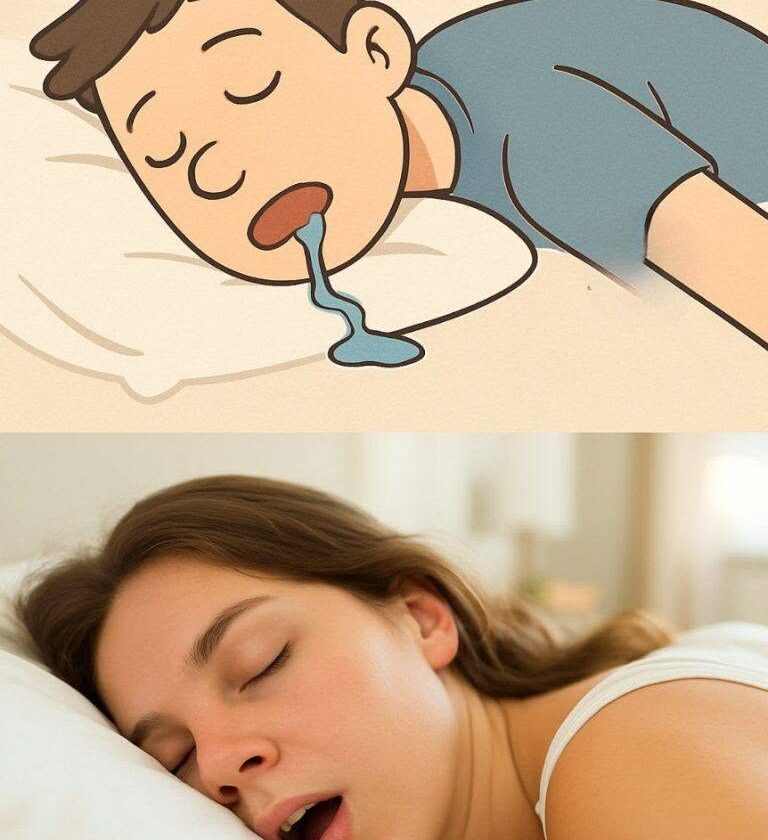
Frequent drooling or increased saliva during sleep is often harmless, but it can sometimes be associated with certain health conditions. It is not, by itself, a reliable sign that someone has a disease. Common causes include sleeping position, nasal congestion, mouth breathing, medication effects, or simply producing more saliva.
Conditions that can sometimes be associated with drooling include:
- Sleep apnea — breathing interruptions during sleep can lead to mouth breathing and drooling.
- Nasal blockage or allergies — difficulty breathing through the nose may cause the mouth to stay open.
- Acid reflux (GERD) — can occasionally trigger increased saliva production.
- Neurological conditions — some disorders affecting swallowing or muscle control can cause drooling.
- Certain medications — some medicines can increase saliva production or affect swallowing.
- Oral or throat problems — issues that make swallowing uncomfortable may contribute.
Consider talking with a healthcare professional if drooling is new, severe, worsening, or accompanied by symptoms such as:
- choking or trouble swallowing
- loud snoring or pauses in breathing during sleep
- facial weakness, speech changes, or sudden confusion
- unexplained weight loss or neurological changes
If you mean drooling only while asleep and it has been happening for a long time without other symptoms, it is often related to sleep habits rather than a serious disease.