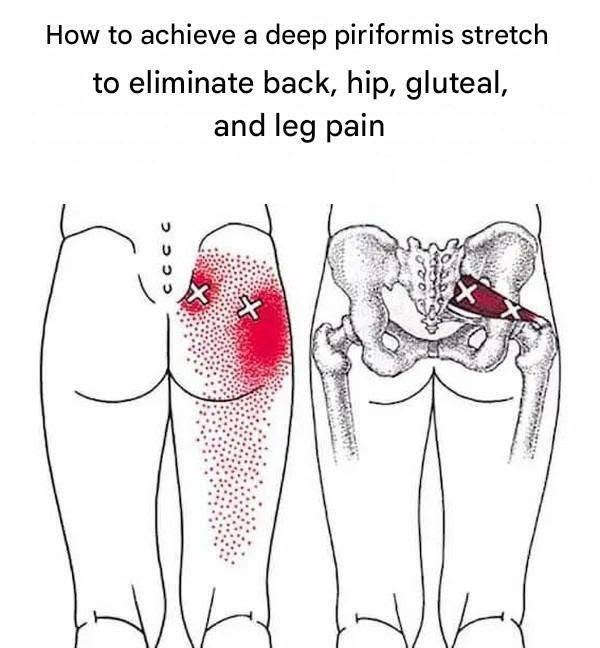
The claim “How to achieve a deep piriformis stretch to eliminate back, hip, gluteal, and leg pain” overpromises. A piriformis stretch may help some people, but it does not eliminate all back, hip, buttock, or leg pain because those symptoms can have many different causes.
What is the piriformis?
The piriformis is a small muscle deep in the buttock that helps rotate and stabilize the hip. If it becomes tight or irritated, it can contribute to pain in the buttock and, in some people, pain that radiates down the back of the leg.
A common piriformis stretch
One gentle stretch is the figure-4 stretch:
- Lie on your back with both knees bent.
- Cross one ankle over the opposite knee, making a “4” shape.
- Reach behind the supporting thigh and gently pull it toward your chest.
- You should feel a stretch deep in the buttock of the crossed leg.
- Hold for 20–30 seconds, then repeat 2–4 times on each side.
You should feel a gentle stretch, not sharp or worsening pain.
Other things that may help
- Gentle hip and glute strengthening exercises.
- Regular walking or light activity if tolerated.
- Avoid sitting in one position for long periods.
- Improve posture and take movement breaks during the day.
When stretching may not be the answer
Pain in the back, hip, or leg can also be caused by:
- A herniated spinal disc.
- Hip arthritis.
- Sacroiliac joint problems.
- Muscle strains.
- Other nerve conditions.
If stretching makes your pain worse, or if you have leg weakness, numbness, loss of bladder or bowel control, fever, or severe pain after an injury, seek medical evaluation promptly.
For persistent pain, a healthcare professional or physical therapist can help identify the cause and recommend exercises that are appropriate for your specific condition.