Piriformis Stretching: A Safe Approach for Back, Hip, Glute, and Leg Discomfort
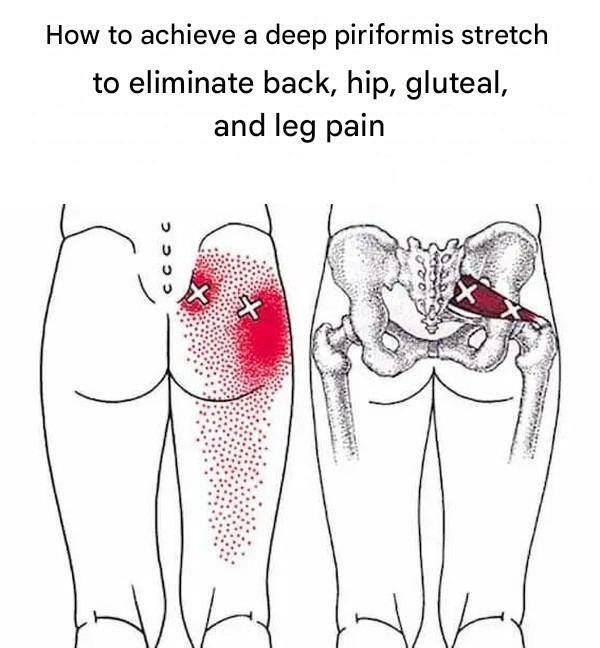
The Piriformis Muscle is a small muscle located deep in the buttock. It helps rotate and stabilize the hip. When it becomes tight or irritated, it may contribute to pain in the buttock area and sometimes symptoms that radiate down the leg, a condition often referred to as Piriformis Syndrome.
It’s important to note that not all back, hip, gluteal, or leg pain is caused by the piriformis muscle. Conditions such as Sciatica, hip arthritis, muscle strains, or spinal problems can produce similar symptoms.
🔹 Seated Figure-4 Stretch
This is one of the gentlest piriformis stretches.
How to do it:
- Sit upright in a chair.
- Place your right ankle on your left knee.
- Keep your back straight.
- Slowly lean forward until you feel a stretch in the right buttock.
- Hold for 20–30 seconds.
- Repeat on the other side.
Tips:
- Stretch to a mild-to-moderate sensation, not pain.
- Breathe normally throughout.
🔹 Lying Figure-4 Stretch
A popular option for a deeper stretch.
Steps:
- Lie on your back with knees bent.
- Cross your right ankle over your left thigh.
- Reach behind your left thigh and gently pull it toward your chest.
- You should feel a stretch in the right gluteal area.
- Hold for 20–30 seconds.
- Switch sides.
🔹 Knee-to-Opposite-Shoulder Stretch
This stretch targets the outer hip and piriformis region.
Instructions:
- Lie on your back.
- Bend your right knee.
- Gently pull the right knee toward your left shoulder.
- Hold for 20–30 seconds.
- Repeat on both sides.
🔹 Pigeon Pose (Advanced)
Pigeon Pose from yoga can create an intense stretch in the hip and gluteal muscles.
Caution:
- Avoid forcing the position.
- Use cushions or yoga blocks for support.
- Skip this stretch if it causes sharp pain.
⚠️ Important Stretching Guidelines
Do:
✅ Move slowly and gently
✅ Hold stretches without bouncing
✅ Stretch both sides
✅ Stop if symptoms worsen
Avoid:
❌ Forcing a deep stretch
❌ Stretching through sharp pain
❌ Continuing if numbness or severe radiating pain increases
💪 Strengthening Matters Too
Tight piriformis muscles are often accompanied by weakness in surrounding muscles.
Helpful exercises may include:
- Glute bridges
- Clamshells
- Side-lying leg raises
- Hip stability exercises
A combination of stretching and strengthening is often more effective than stretching alone.
🩺 When to Seek Medical Advice
Consult a healthcare professional if you experience:
- Severe pain
- Progressive weakness
- Loss of bladder or bowel control
- Persistent numbness
- Symptoms that do not improve
These symptoms may indicate a condition other than a tight piriformis muscle.
📌 Key Takeaway
A piriformis stretch may help relieve some forms of buttock, hip, and leg discomfort, especially when caused by tightness around the Piriformis Muscle. However, no stretch can guarantee the elimination of all back, hip, gluteal, or leg pain. The safest approach is to stretch gently, strengthen supporting muscles, and seek professional evaluation if symptoms persist or worsen.