If you want a super effective homemade herbicide, you can make simple non-selective weed killers using common household ingredients—but it’s important to know upfront: these don’t “target” weeds specifically and can damage soil or nearby plants.
Here are the most effective safe DIY options:
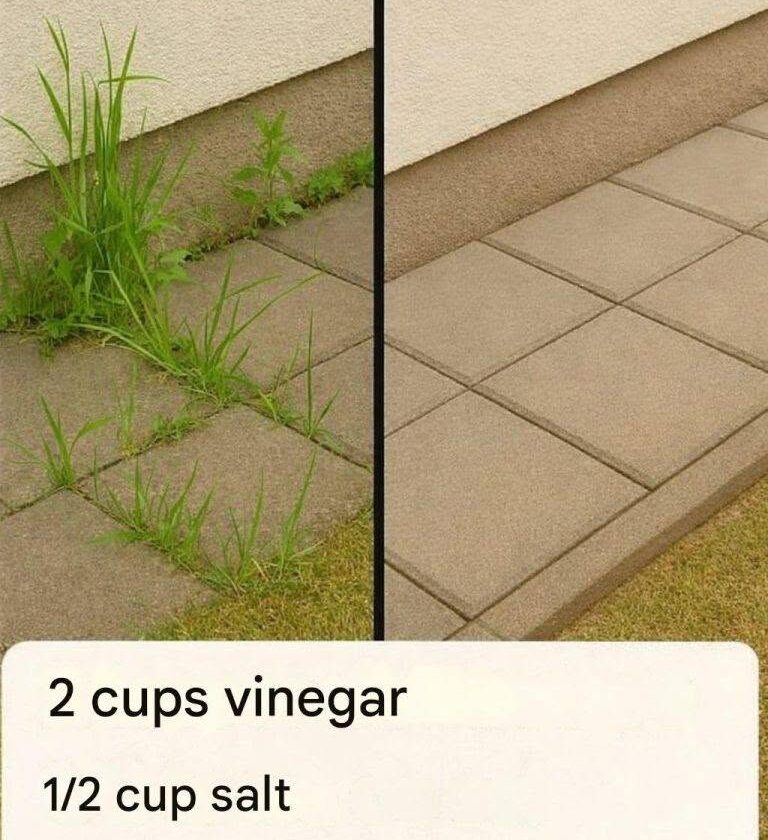
🌿 1) Vinegar + salt + dish soap (strongest common mix)
This is the most widely used homemade weed killer.
How it works:
- Vinegar (acetic acid) burns leaves
- Salt dehydrates plants and prevents regrowth
- Soap helps it stick to leaves
Basic mix:
- 1 liter white vinegar (higher strength works better)
- 2–3 tablespoons salt
- 1–2 teaspoons dish soap
How to use:
- Spray directly on weeds on a hot, sunny day
- Avoid spraying nearby grass or plants you want to keep
⚠️ Warning: Salt can make soil infertile for a long time.
🌿 2) Boiling water (simple and very effective)
Best for cracks in pavements or driveways
- Just pour boiling water directly on weeds
- Works by instantly destroying plant cells
✔ No chemicals
✔ Very fast
❌ Doesn’t prevent regrowth
🌿 3) Vinegar alone (safer for soil)
- Use 5–20% vinegar (stronger = more effective)
- Spray leaves thoroughly
✔ Less soil damage than salt mix
❌ May require repeated applications
🌿 4) Baking soda (for small areas like cracks)
- Sprinkle directly onto weeds in dry areas
- Works by drying them out
⚠️ Important reality check
Homemade herbicides are:
- Non-selective (they kill any plant they touch)
- Short-term solutions (roots often survive)
- Not as reliable as commercial herbicides like glyphosate-based products
🌱 Better long-term control (often overlooked)
If you want fewer weeds over time:
- Pull weeds after rain (roots come out easier)
- Mulch soil to block sunlight
- Use landscape fabric in garden beds
- Keep soil covered (bare soil = more weeds)
If you tell me where you want to use it (garden, lawn, driveway, crops), I can suggest the safest and most effective method for that specific situation.