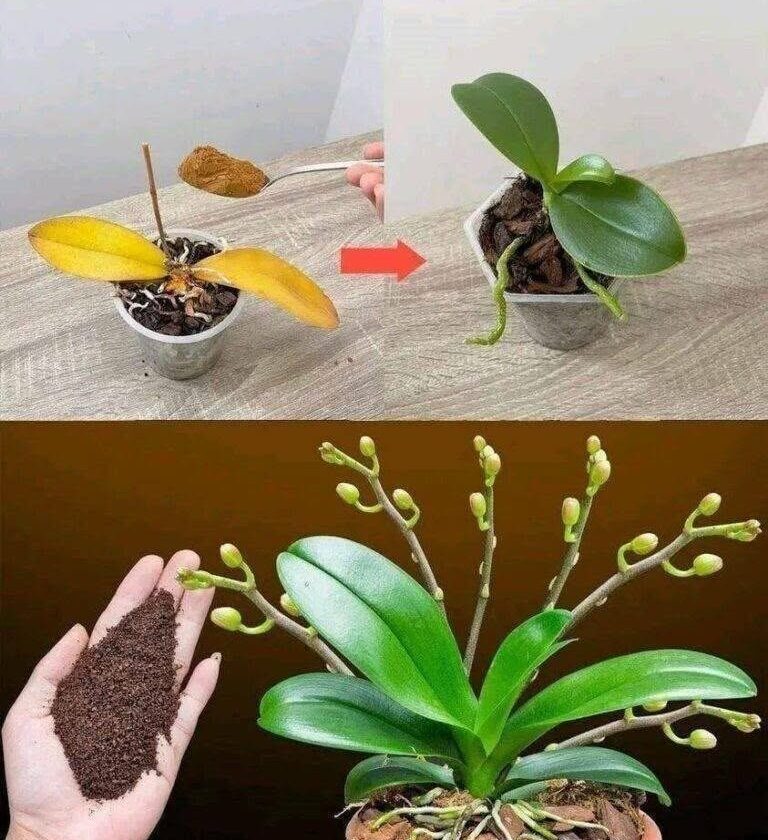
If you’ve seen claims that “just one teaspoon” of a household ingredient will make an orchid suddenly bloom with lots of flowers, be cautious. Orchids do not have a magic fertilizer that instantly triggers abundant blooms. Flowering depends on the orchid’s species, light, temperature, watering, root health, and natural growth cycle.
What actually helps orchids bloom:
🌱 1. Provide the right light
- Most orchids (such as Phalaenopsis) prefer bright, indirect light.
- Too little light often leads to healthy leaves but no flowers.
💧 2. Water correctly
- Water when the potting mix is starting to dry.
- Avoid letting roots sit in standing water, which can cause rot.
🌡️ 3. Give a temperature difference
- Many orchids bloom better when nighttime temperatures are slightly cooler than daytime temperatures.
🌿 4. Feed appropriately
- Use a balanced orchid fertilizer at the recommended strength.
- Too much fertilizer can damage roots and reduce flowering.
🪴 5. Keep roots healthy
- Orchids need airy potting material (such as bark mixes) and good drainage.
- Healthy roots support future blooms.
A teaspoon of a substance like sugar, baking soda, or other kitchen ingredients is often promoted online, but these methods are not proven to reliably produce orchid flowers and may sometimes harm the plant.
For the best chance of blooms, focus on light, proper watering, healthy roots, and patience—many orchids naturally flower only at certain times of the year.