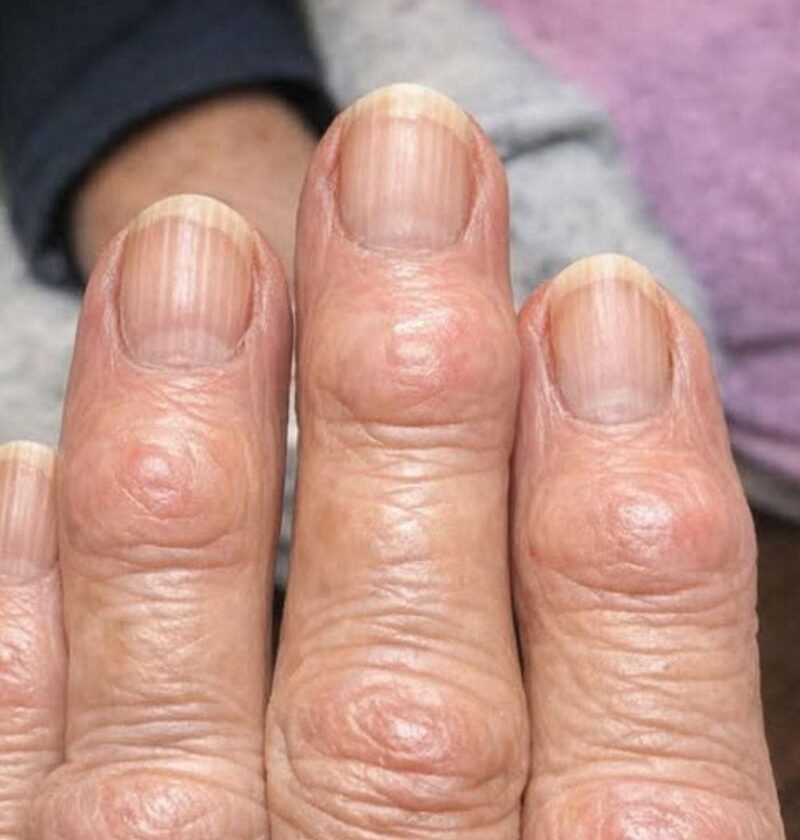
Hard Bumps on Finger Joints Near Nails: Causes, Meaning, and When to Worry
Focus Keywords: hard bumps on finger joints, knuckle lumps near nails, finger joint swelling causes, osteoarthritis finger nodes, Heberden’s nodes, arthritis finger deformity
Most Common Cause: Osteoarthritis Nodes
Osteoarthritis
The most likely explanation—especially in older adults—is osteoarthritis, a wear-and-tear joint condition.
In fingers, it often forms:
Heberden’s nodes (near the nails)
- Hard, bony lumps at the last finger joint
- Develop slowly over months or years
- Can appear on multiple fingers
These are not “spreading” in the infectious sense—they usually develop gradually in different joints over time.
Why These Bumps Form
Over time:
- Cartilage in finger joints wears down
- Bones rub together
- Body forms extra bone to stabilize the joint
- This creates hard nodules
So the “bump” is actually new bone growth, not a soft swelling or infection.
Why It May Look Like It’s Spreading
People often think it is spreading because:
- More fingers become affected over time
- New joints develop bumps slowly
- Both hands may show similar changes
But this follows a gradual joint degeneration pattern, not a contagious process.
Other Possible Causes
While osteoarthritis is most common, other conditions can also cause finger lumps:
1. Rheumatoid arthritis
An autoimmune condition causing joint swelling and deformity (usually softer and painful).
2. Ganglion cysts
Fluid-filled lumps near joints or tendons (softer and movable).
3. Bony spurs or calcification
Extra bone growth due to long-term joint stress.
Symptoms That Suggest Osteoarthritis
Common signs include:
- Hard, bony bumps near finger joints
- Mild stiffness, especially in the morning
- Reduced flexibility
- Occasional aching pain
- Slow progression over time
When It Needs Medical Attention
A doctor should evaluate it if:
- Pain is increasing quickly
- Joints become red or hot
- Severe stiffness limits hand movement
- Rapid swelling appears
A simple exam and sometimes an X-ray can confirm the cause.
Can It Be Reversed?
Bone changes from osteoarthritis cannot be reversed, but symptoms can be managed with:
- Hand exercises
- Anti-inflammatory treatments (if needed)
- Warm compresses
- Joint protection techniques
Early management helps maintain mobility.
What Helps Most
- Gentle finger movement exercises
- Avoiding excessive strain on hands
- Maintaining healthy weight (reduces overall joint stress)
- Doctor-recommended pain relief if needed
Final Thoughts
Hard bumps forming near finger joints—especially near the nails—are most commonly Heberden’s nodes from osteoarthritis. They may appear to “spread,” but they actually develop slowly as part of a long-term joint change process, not an infection.