Here’s a detailed article in a similar style while keeping the medical information accurate:
New Method: Will Colonoscopy No Longer Be an Invasive Examination?
For many people, the thought of having a colonoscopy is enough to cause anxiety. Concerns about discomfort, preparation, and the invasive nature of the procedure often lead people to delay an important screening that could detect colorectal cancer at an early, highly treatable stage.
Fortunately, medical technology is advancing rapidly. Researchers and healthcare providers are developing new screening methods that may reduce the need for traditional invasive procedures in some situations. While these innovations are promising, it’s important to understand what they can—and cannot—replace.
Why Colonoscopy Is Still Considered the Gold Standard
A colonoscopy allows a doctor to examine the entire lining of the colon and rectum using a thin, flexible tube equipped with a tiny camera. During the procedure, the doctor can also remove polyps or take tissue samples (biopsies) if anything unusual is found.
This combination of detection and treatment in a single procedure is one reason colonoscopy remains the most comprehensive screening test for colorectal cancer.
New Screening Methods Are Changing the Landscape
Although traditional colonoscopy is still widely recommended for many people, several newer technologies are making colorectal cancer screening more comfortable and convenient.
1. Stool DNA Tests
These at-home tests look for tiny amounts of blood and abnormal DNA that may be shed by colon polyps or colorectal cancers.
Advantages:
- No hospital visit required
- No sedation
- No bowel preparation
- Can be completed at home
Limitations:
A positive result does not diagnose cancer. If abnormalities are detected, a standard colonoscopy is usually needed to confirm the findings and remove any polyps.
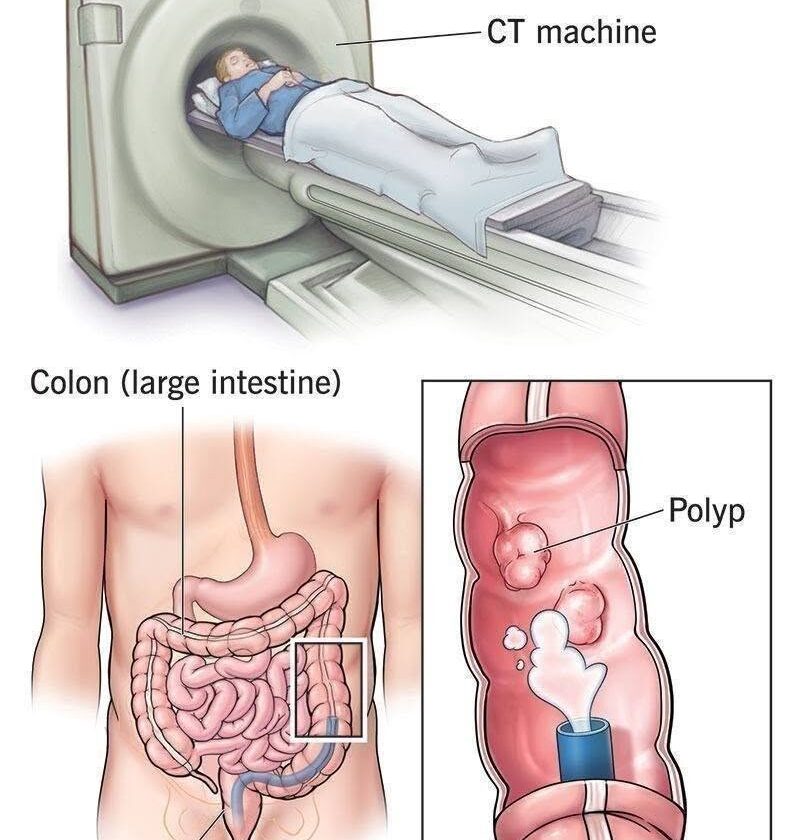
2. CT Colonography (Virtual Colonoscopy)
Often called a “virtual colonoscopy,” this test uses a CT scanner to create detailed images of the colon instead of inserting a camera throughout the entire intestine.
Benefits include:
- Less invasive than a conventional colonoscopy
- No sedation required
- Usually completed in about 10–15 minutes
However, bowel preparation is still generally required, and if suspicious growths are found, a conventional colonoscopy is needed for removal or biopsy.
3. Colon Capsule Endoscopy
One of the most exciting newer technologies involves swallowing a vitamin-sized capsule that contains tiny cameras.
As the capsule travels naturally through the digestive tract, it captures thousands of images that are transmitted to a recording device worn by the patient. These images are later reviewed by a specialist.
Potential advantages include:
- No sedation
- No endoscope inserted through the rectum
- Comfortable for many patients
The capsule cannot remove polyps or collect tissue samples, so abnormal findings still require a traditional colonoscopy.
Blood Tests on the Horizon
Researchers have also developed blood tests designed to detect biological markers associated with colorectal cancer.
These tests may increase participation in screening because they require only a routine blood draw. However, many are still being evaluated or are intended for selected screening situations rather than replacing colonoscopy entirely.
Will Colonoscopy Become Obsolete?
Not yet.
While these newer technologies are expanding screening options, they currently complement rather than completely replace conventional colonoscopy.
Traditional colonoscopy remains the preferred procedure when:
- A screening test is positive
- Symptoms such as rectal bleeding or unexplained anemia need investigation
- Polyps need to be removed
- Tissue samples are required for diagnosis
- A person has a higher risk of colorectal cancer
The Most Important Step Is Getting Screened
Experts agree that the best screening test is often the one that a person is willing and able to complete. Offering multiple options may encourage more people to participate in routine colorectal cancer screening, leading to earlier detection and better outcomes.
If you’re eligible for colorectal cancer screening or have concerns about your digestive health, discuss the available options with your healthcare provider. They can recommend the most appropriate test based on your age, personal health history, family history, symptoms, and individual risk factors.
Final Thoughts
Medical advances are making colorectal cancer screening less intimidating than ever before. Innovations such as stool DNA testing, CT colonography, capsule endoscopy, and emerging blood tests provide valuable alternatives for some people and may improve access to screening.
However, traditional colonoscopy remains the most comprehensive test because it not only detects abnormalities but also allows doctors to remove polyps and collect biopsies during the same procedure. As research continues, less invasive methods may play an even greater role, but for now, they work alongside—not entirely in place of—conventional colonoscopy.
If you’d like, I can also create a viral Facebook-style “See More” version with a curiosity-driven headline and engaging introduction.