That kind of claim is very typical social media gardening hype and should be taken carefully.
🌸 Reality about orchids
Orchids (especially Phalaenopsis) don’t bloom “non-stop” because of a single tablespoon of anything. Their flowering depends on:
- light levels
- temperature changes (especially day/night difference)
- proper watering cycle
- overall plant health and maturity
No fertilizer can override those biological limits.
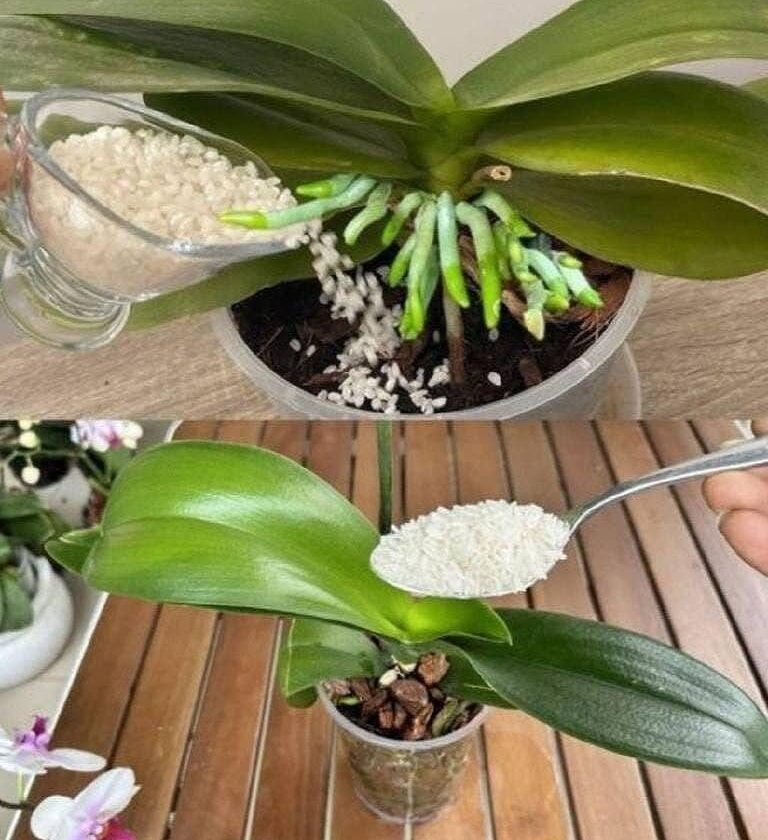
🧪 About “1 tablespoon miracle fertilizer” claims
These usually refer to homemade mixes like:
- diluted banana water
- rice water
- Epsom salt solutions (magnesium sulfate)
- sugar or yeast mixtures
The problem:
- They are not balanced fertilizers
- Overuse can cause root rot or salt buildup
- Orchids are sensitive—too much feeding hurts more than helps
🌱 What actually helps orchids bloom
For reliable flowering:
1. Use proper orchid fertilizer
- Balanced formula like 20-20-20 or orchid-specific feeds
- Very diluted (¼ strength)
2. Light matters most
- Bright, indirect light (near a window, not direct sun)
3. Temperature drop triggers blooms
- Slightly cooler nights often help trigger flowering
4. Water correctly
- Water only when roots turn silvery
- Never leave roots sitting in water
⚠️ Key truth
If orchids are healthy, they may rebloom naturally—but:
- they have rest periods
- they do not bloom nonstop
- fertilizer alone does not control flowering cycles
🌸 Bottom line
The “1 tablespoon and nonstop blooms” claim is not scientifically reliable. It may show short-term growth in some cases, but it’s not a true blooming system and can even harm orchids if misused.
If you want, I can show you a safe orchid feeding schedule that actually improves flowering without risking root damage.