Recognize the Warning Signs of a Stroke: Why Every Minute Counts and How to Act Fast
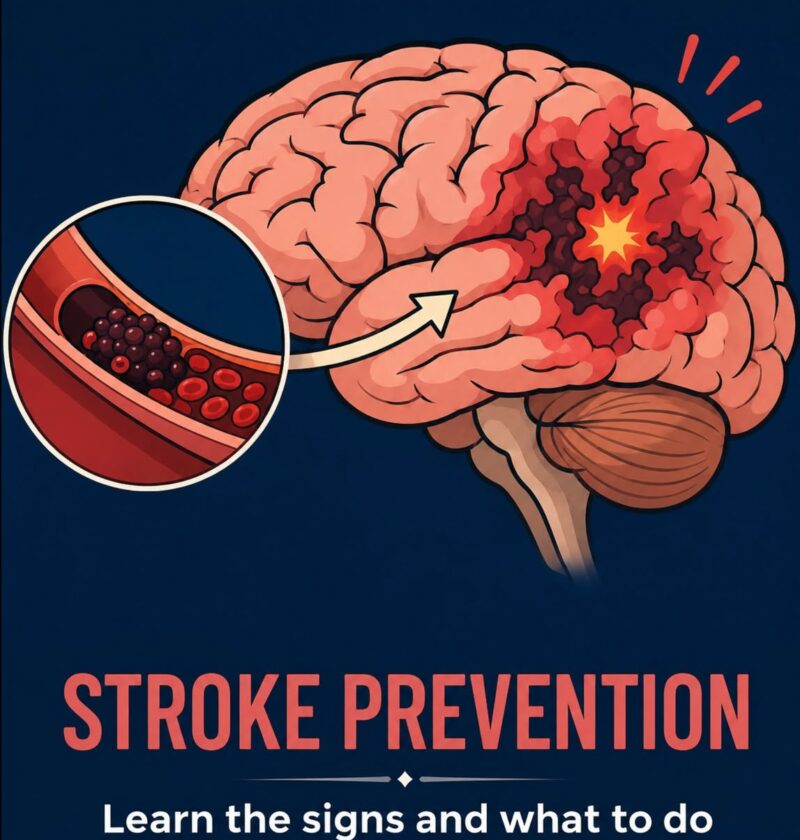
A stroke occurs when blood flow to part of the brain is interrupted or when a blood vessel in the brain ruptures. Brain cells begin to die within minutes, which is why stroke is a medical emergency. Quick recognition and treatment can significantly improve the chances of recovery and reduce the risk of permanent disability.
Common Warning Signs of a Stroke
The easiest way to remember the major warning signs is FAST:
- F – Face drooping: One side of the face may droop or feel numb. Ask the person to smile and check whether the smile is uneven.
- A – Arm weakness: One arm may feel weak or numb. Ask the person to raise both arms and see if one drifts downward.
- S – Speech difficulty: Speech may become slurred, confused, or difficult to understand.
- T – Time to call emergency services: If any of these symptoms appear, seek emergency medical help immediately.
Additional Stroke Symptoms
Other symptoms can include:
- Sudden numbness or weakness, especially on one side of the body
- Sudden confusion or trouble understanding speech
- Sudden vision problems in one or both eyes
- Sudden difficulty walking
- Loss of balance or coordination
- Sudden dizziness
- A severe headache with no known cause
Why Every Minute Counts
During a stroke, millions of brain cells can be damaged each minute that blood flow is disrupted. Rapid treatment may:
- Reduce brain damage
- Improve survival rates
- Increase the likelihood of a full recovery
- Lower the risk of long-term disability
For some types of stroke, clot-busting medications and other treatments are most effective when given as soon as possible after symptoms begin.
What to Do If You Suspect a Stroke
- Call emergency services immediately.
- Note the time symptoms started. This information helps healthcare providers determine treatment options.
- Keep the person safe and comfortable.
- Do not drive yourself if emergency transport is available. Emergency responders can begin assessment and notify the hospital.
- Do not give food, drink, or medication unless instructed by medical professionals.
Symptoms That Come and Go Matter Too
A temporary episode of stroke-like symptoms may be a Transient Ischemic Attack (TIA), sometimes called a “mini-stroke.” Even if symptoms disappear completely, urgent medical evaluation is necessary because a TIA can be a warning sign of a future stroke.
Key Takeaway
If you notice sudden facial drooping, arm weakness, speech difficulties, or other sudden neurological symptoms, treat the situation as an emergency. Fast action can save brain function, reduce disability, and potentially save a life. The safest approach is to seek immediate medical attention whenever stroke symptoms are suspected.