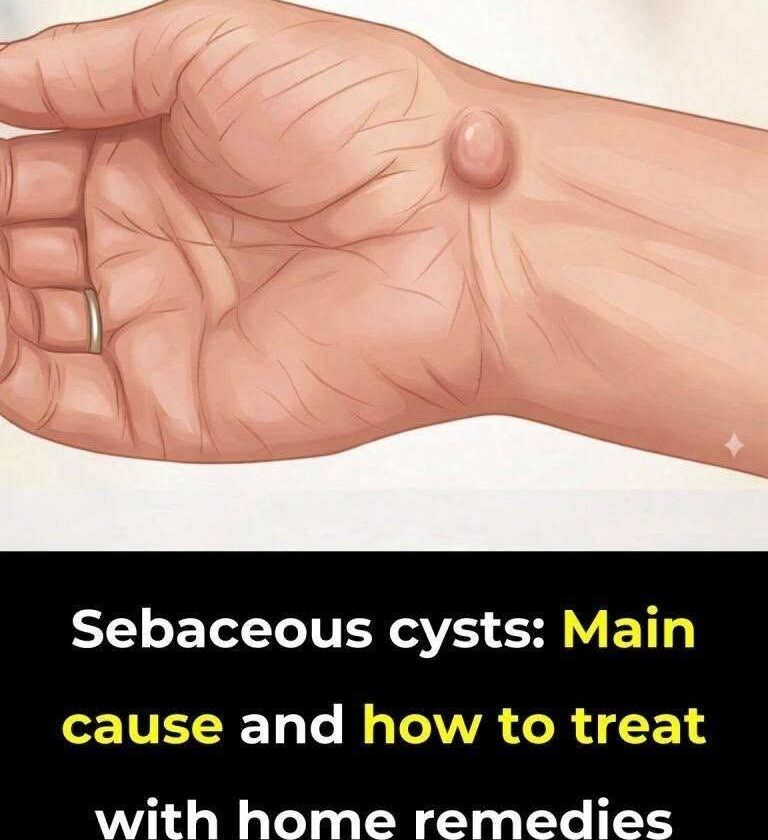
Sebaceous Cysts Explained: Main Causes and Home Remedy Solutions
A “sebaceous cyst” is a common term used for a skin lump that often forms from a blocked oil gland or a damaged hair follicle. In medical terms, many of these lumps are more accurately called epidermoid cysts rather than true sebaceous cysts.
Epidermoid cyst
They are usually non-cancerous and may remain small and painless, but they can sometimes become inflamed, tender, or infected.
What Causes These Cysts?
1. Blocked Skin Pores or Follicles
When skin cells or oil become trapped beneath the skin, a sac can form and gradually fill with a thick, white material called keratin.
2. Skin Injury
A small injury or irritation may damage a hair follicle and contribute to cyst formation.
3. Genetics
Some people are more prone to developing multiple cysts because of inherited tendencies.
4. Hormonal Changes
Changes in oil production and skin activity may contribute in some individuals.
5. Acne-Prone Skin
People with a history of acne may have a higher chance of developing certain types of skin cysts.
Common Signs of a Sebaceous/Epidermoid Cyst
You may notice:
- A round, smooth lump under the skin
- Slow growth over time
- A small opening or dark spot on the surface
- A thick, sometimes foul-smelling discharge if it ruptures
- Redness, swelling, or pain if inflamed
Home Care and Comfort Measures
Home remedies may help with comfort, but they usually do not remove the cyst completely.
1. Warm Compress
Applying a warm, clean cloth for 10–15 minutes several times a day may:
- Reduce discomfort
- Encourage natural drainage if the cyst is already opening
- Improve local circulation
2. Keep the Area Clean
- Wash gently with mild soap and water.
- Avoid squeezing, popping, or cutting the cyst.
Trying to force it out can push material deeper, increase inflammation, or cause infection and scarring.
3. Reduce Friction
Avoid tight clothing or repeated rubbing over the area.
What Treatments Remove a Cyst?
If a cyst is bothersome, repeatedly returns, or becomes infected, a healthcare professional may recommend:
- Steroid injection to reduce inflammation
- Drainage if infected (though the cyst wall may remain)
- Complete surgical removal of the cyst sac to reduce the