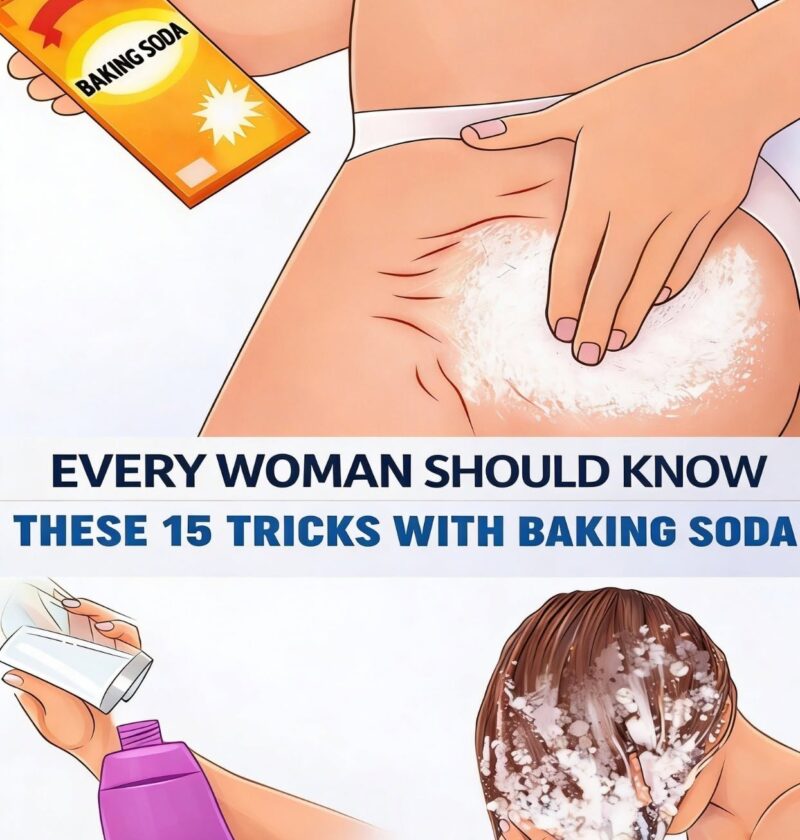
The “little white box” is usually Baking Soda, and the claim about “13 everyday uses for beauty, comfort, and home freshness” is mostly true in a practical sense, but often exaggerated in how powerful it sounds.
Baking soda is cheap, useful, and versatile—but it’s not a miracle cure or a complete replacement for skincare or cleaning products.
🏠 Common real uses (what actually works)
🧼 1. Cleaning and deodorizing
- Neutralizes odors (fridge, shoes, carpets)
- Helps lift mild stains
- Works as a gentle abrasive cleaner
🚿 2. Bathroom and kitchen cleaning
- Helps scrub sinks and tiles
- Can remove grease when combined with water or vinegar (reaction produces fizzing)
👃 3. Odor control
- Absorbs smells in trash bins, shoes, and pet areas
💆♀️ Beauty & personal care claims (be careful)
🦷 Teeth whitening
- Can remove surface stains
- BUT: overuse can damage enamel due to abrasiveness
🧖 Skin “beauty” uses
- Sometimes used as a scrub or acne remedy online
- ⚠️ Problem: It is alkaline and can disrupt skin’s natural pH → irritation or dryness
🛁 Bath additive
- Can soften bath water and temporarily soothe skin irritation
⚠️ What it does NOT do (common exaggerations)
- Does not “detox the body”
- Does not cure acne permanently
- Does not reverse aging or wrinkles
- Does not treat infections or internal diseases
🧭 Safety notes
- Avoid frequent use on skin (can cause irritation)
- Don’t overuse on teeth
- Not a substitute for medical treatments or proper hygiene products
✅ Bottom line
Baking soda is a useful household helper, especially for cleaning and odor control. But viral posts often stretch its benefits into “natural cure-all” territory, which is not supported by evidence.
If you want, I can list the best safe baking soda uses vs. the ones you should avoid completely—that’s where most people get misled.