Urine color can provide useful clues about hydration, diet, medications, and sometimes underlying health conditions. A single unusual color isn’t always a cause for concern, but persistent changes or symptoms should be evaluated.
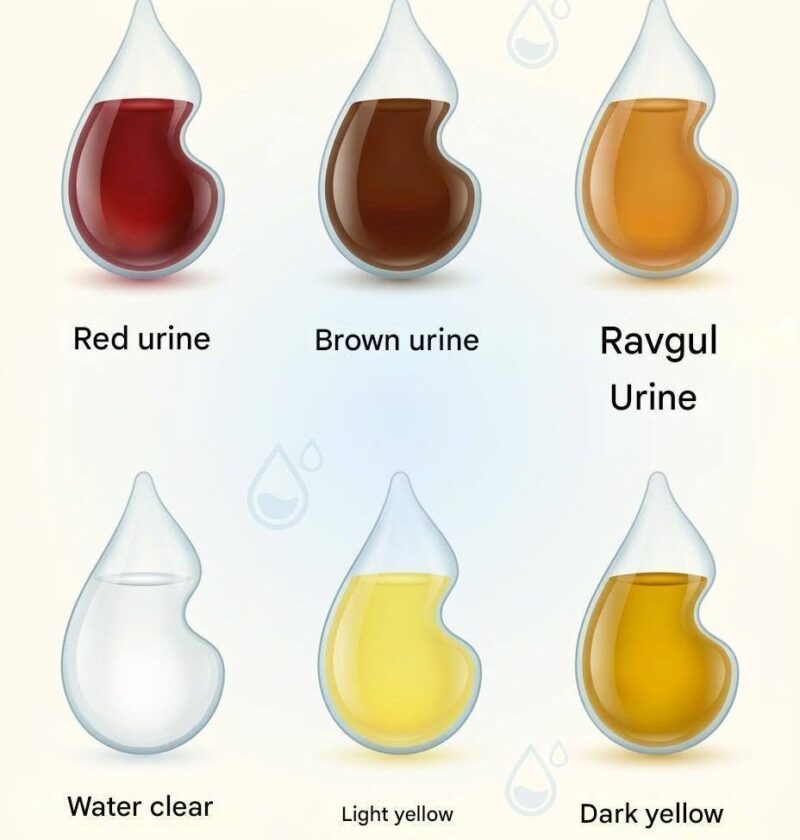
Clear
- Usually means you’re very well hydrated.
- If it’s consistently clear and you’re drinking excessive amounts of water or urinating very frequently, discuss it with a healthcare professional.
Pale yellow to light yellow
- Generally considered normal.
- This color usually indicates good hydration.
Dark yellow or amber
- Often means you’re dehydrated.
- Try drinking more fluids unless you’ve been told to limit your fluid intake.
Orange
Possible causes include:
- Dehydration
- Certain medications
- Some vitamin supplements
- Less commonly, liver or bile duct problems, especially if accompanied by pale stools or yellowing of the skin or eyes
Pink or red
Possible causes include:
- Beets, blackberries, or rhubarb
- Blood in the urine (which can result from urinary tract infections, kidney stones, enlarged prostate, kidney disease, or, less commonly, cancer)
- Certain medications
If you haven’t eaten foods that can discolor urine, or if the color persists, seek medical evaluation promptly.
Brown or dark tea-colored
Possible causes include:
- Severe dehydration
- Certain medications
- Liver disease
- Muscle injury that releases muscle proteins into the bloodstream
This color warrants prompt medical evaluation, especially if accompanied by muscle pain, weakness, or yellowing of the skin.
Blue or green
Rare causes include:
- Certain medications or dyes
- Some vitamin supplements
- Rare genetic or bacterial conditions
Cloudy or milky
Possible causes include:
- Urinary tract infection
- Kidney stones
- Crystals in the urine
If accompanied by pain, fever, burning with urination, or a strong odor, you should be evaluated.
When to seek medical care
Contact a healthcare professional if you have:
- Red or cola-colored urine without an obvious food-related cause
- Blood clots in the urine
- Persistent dark brown urine
- Fever, burning, or pain when urinating
- Severe back or side pain
- Swelling, decreased urine output, or persistent changes in urine color
In general, pale yellow is the color most often associated with healthy hydration. While urine color is a helpful clue, it isn’t enough on its own to diagnose a medical condition, so persistent or concerning changes should be assessed in the context of your symptoms and medical history.