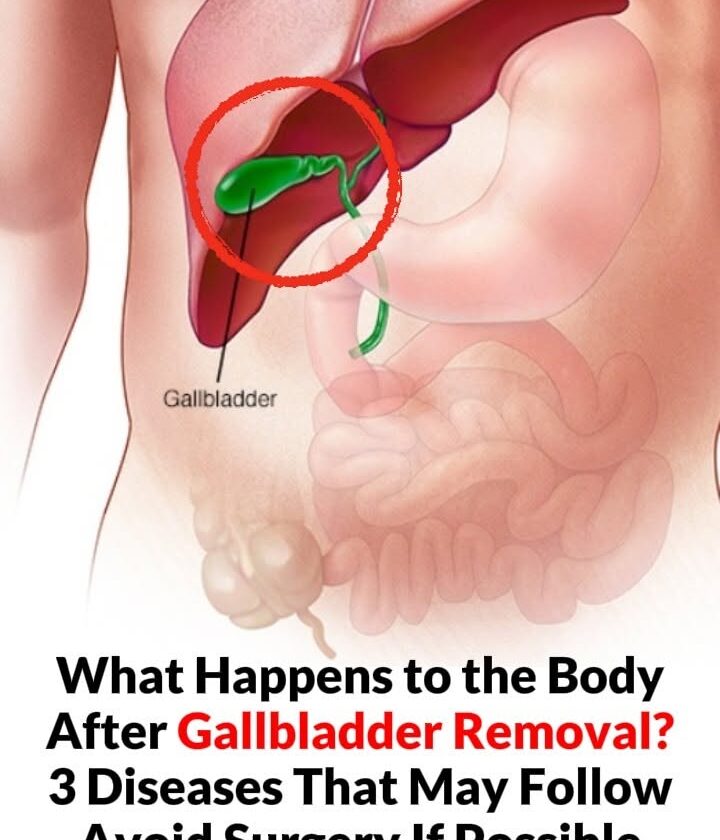
The headline you shared is a classic “fear-based” framing. Let’s separate real medical facts from exaggeration.
The gallbladder is a small storage organ for bile. When it’s removed (a surgery called cholecystectomy), bile flows directly from the liver into the intestine.
This is done when there are serious problems like gallstones or inflammation.
🧠 What actually happens after gallbladder removal
Most people live completely normal lives. The body does not stop producing bile—it just changes how bile is delivered.
Common short-term changes:
- Loose stools or diarrhea (temporary for many)
- Bloating or gas after fatty meals
- Mild digestive adjustment period (weeks to months)
Most people adapt well over time.
⚠️ “3 diseases that may follow” — what’s real vs exaggerated
Some videos claim removal causes serious new diseases. Here’s the reality:
1. Post-cholecystectomy diarrhea (real but usually manageable)
- Happens because bile flows continuously into the gut
- Can cause frequent or loose stools in some people
- Often improves with diet changes or medication
2. Bile reflux gastritis (uncommon)
- Bile can irritate the stomach lining in some cases
- Symptoms: burning stomach pain, nausea, reflux-like feeling
- Treatable, and not common
3. Sphincter of Oddi dysfunction / biliary-type pain (rare)
- A functional issue where bile flow regulation causes discomfort
- Can mimic gallbladder pain even after removal
- Not common and often over-diagnosed online
🚫 What these videos often get wrong
- They suggest surgery “causes disease” — not accurate
- They ignore that untreated gallbladder disease can be dangerous
- Infection (cholecystitis)
- Blocked bile ducts
- Pancreatitis (can be severe)
In many cases, surgery prevents these complications.
⚖️ So… should you “avoid surgery if possible”?
A better, medically accurate framing is:
- Avoid unnecessary surgery, yes
- But do not avoid medically indicated surgery
If gallstones are causing:
- repeated pain
- infection
- blocked ducts
- pancreatitis risk
…removal is often the safest long-term option.
🧾 Bottom line
- Most people do very well without a gallbladder
- A few experience digestive changes, usually mild or manageable
- Serious long-term “diseases” are uncommon
- The risk of leaving a diseased gallbladder untreated is often higher than removing it
If you want, I can explain natural ways people manage gallstones before surgery is recommended, or how diet changes after gallbladder removal actually work in real life.